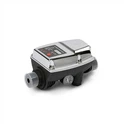
As a dedicated supplier of water pump pressure controllers, I've often been asked about the power consumption of these crucial devices. Understanding the power consumption of a water pump pressure controller is essential for both residential and commercial users, as it directly impacts energy costs and overall efficiency. In this blog, I'll delve into the factors that influence power consumption, how to calculate it, and provide insights to help you make informed decisions.
Factors Influencing Power Consumption
1. Controller Type
There are various types of water pump pressure controllers available in the market, each with its own power requirements. For instance, a basic Factory Water Pump Switch typically has a relatively low power consumption. These switches are designed for simple on - off operations based on pressure thresholds. They usually consume power only when the pump is running or when the pressure is approaching the set limits, triggering the switch to operate.
On the other hand, more advanced controllers like the LCD Pump Pressure Switch may consume more power. These controllers often feature an LCD display that shows real - time pressure readings, and they may have additional functions such as programmable settings and data logging. The display and the associated electronics require a continuous supply of power to function properly.
2. Pump Size and Capacity
The power consumption of the pressure controller is also related to the size and capacity of the water pump it controls. Larger pumps generally require more power to operate, and the pressure controller needs to be able to handle the electrical load associated with the pump. A pressure controller for a high - capacity commercial pump will likely have a different power consumption profile compared to one for a small residential pump.
3. Operating Conditions
The frequency of pump operation and the pressure range within which the controller operates also affect power consumption. If the pump is frequently turning on and off due to a small pressure differential setting, the controller will be more active, consuming more power. Additionally, if the controller is operating in an environment with extreme temperatures or high humidity, it may need to expend more energy to maintain its functionality.
Calculating Power Consumption
To calculate the power consumption of a water pump pressure controller, you need to know two key parameters: the power rating of the controller (usually measured in watts, W) and the time it is in operation.
The formula for calculating energy consumption (in watt - hours, Wh) is:
[E = P\times t]
where (E) is the energy consumption, (P) is the power rating of the controller, and (t) is the time (in hours) the controller is in operation.
For example, if a pressure controller has a power rating of 5 watts and it operates for 24 hours a day, the daily energy consumption would be:
[E = 5\ W\times24\ h=120\ Wh]
To convert this to kilowatt - hours (kWh), which is the unit used by utility companies for billing, divide by 1000:
[E = 120\ Wh\div1000 = 0.12\ kWh]
Energy - Saving Tips
As a supplier, I understand the importance of energy efficiency. Here are some tips to reduce the power consumption of your water pump pressure controller:
1. Optimize Pressure Settings
Set the pressure differential of the controller to an appropriate level. Avoid setting it too narrow, as this will cause the pump to turn on and off frequently, increasing power consumption. A wider pressure differential will result in fewer pump starts and stops, saving energy.


2. Choose the Right Controller
Select a controller that is suitable for your pump size and application. Don't over - specify a controller with features you don't need, as this can lead to unnecessary power consumption. For simple applications, a basic Factory Water Pump Switch may be sufficient.
3. Regular Maintenance
Keep the controller and the pump in good working condition. A malfunctioning controller or pump can consume more power than normal. Regularly check for leaks, clean the controller's sensors, and ensure that all electrical connections are tight.
Real - World Examples
Let's consider two scenarios: a residential and a commercial application.
Residential Application
In a typical residential setting, a small water pump with a Clean Pump Controller with European Plug is used to supply water to the house. The controller has a power rating of 3 watts. If the pump operates for an average of 5 hours a day, the daily energy consumption of the controller would be:
[E = 3\ W\times5\ h = 15\ Wh=0.015\ kWh]
Over a month (assuming 30 days), the total energy consumption would be (0.015\ kWh\times30 = 0.45\ kWh).
Commercial Application
In a commercial building, a large water pump is used for a sprinkler system. The pressure controller for this pump has a power rating of 10 watts and operates continuously (24 hours a day). The daily energy consumption would be:
[E = 10\ W\times24\ h=240\ Wh = 0.24\ kWh]
Over a month, the total energy consumption would be (0.24\ kWh\times30 = 7.2\ kWh).
Conclusion
The power consumption of a water pump pressure controller is influenced by several factors, including the type of controller, pump size, and operating conditions. By understanding these factors and calculating the power consumption, you can make informed decisions to optimize energy use.
As a supplier of high - quality water pump pressure controllers, I offer a wide range of products to meet different needs and budgets. Whether you need a basic Factory Water Pump Switch for a simple application or an advanced LCD Pump Pressure Switch with additional features, I can provide the right solution.
If you're interested in purchasing a water pump pressure controller or have any questions about power consumption, energy efficiency, or product selection, I encourage you to contact me for a detailed discussion. I'm committed to helping you find the most suitable and energy - efficient solution for your water pumping needs.
References
- Electrical Engineering Handbook, Third Edition
- Water Pump Systems: Design, Installation, and Maintenance Guide