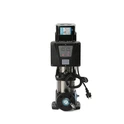
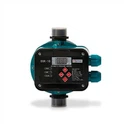
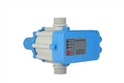
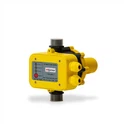
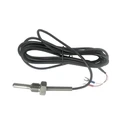
Hey there! I'm a supplier of Clean Water Pump Controllers, and today I'm gonna chat with you about the control parameters that can be set on a clean water pump controller. It's super important to understand these parameters because they can greatly affect how well your pump works and how efficient it is.
Pressure Settings
One of the most crucial control parameters is the pressure settings. You see, the pressure at which the pump starts and stops is key to maintaining a stable water supply.
Let's talk about the cut - in pressure first. This is the pressure level at which the pump kicks into action. For instance, in a typical household water system, you might set the cut - in pressure at around 20 - 30 psi (pounds per square inch). When the water pressure in the system drops to this level, the Automatic Pressure Control Switch for Water Pump senses it and signals the pump to start pumping water.
On the other hand, the cut - out pressure is the point at which the pump stops. Usually, it's set a bit higher than the cut - in pressure. A common cut - out pressure setting could be 40 - 60 psi. Once the water pressure in the system reaches this cut - out level, the pump shuts off. This prevents over - pressurization of the water system, which can cause damage to pipes and other components.
Flow Rate Control
Another important parameter is the flow rate. The flow rate determines how much water the pump can move in a given amount of time, usually measured in gallons per minute (GPM).
You can set the flow rate according to your specific needs. If you're using the pump for a small household with low water demand, you might set a lower flow rate. But if you're supplying water to a large commercial building or an industrial facility, you'll need to set a higher flow rate.
Our Intelligent Adjustable Pressure Pump Control Switch allows you to easily adjust the flow rate. It can sense the demand for water and adjust the pump's speed accordingly. This not only ensures that you have enough water when you need it but also helps save energy by not running the pump at full speed when it's not necessary.
Timer Settings
Timer settings are also quite useful. You can set the pump to run at specific times of the day. For example, if you know that you'll be using a lot of water in the morning for showers and cooking, you can set the pump to start a little earlier to build up the water pressure.
Similarly, if you have a garden that needs to be watered at a certain time, you can program the pump to turn on and off at the appropriate intervals. This is a great way to automate your water supply system and make it more efficient.
Overload Protection
Overload protection is a safety parameter that's built into most clean water pump controllers. It's designed to protect the pump from damage due to over - current or over - voltage.
If the pump draws too much current, maybe because of a blockage in the pipes or a mechanical problem, the overload protection feature will kick in and shut off the pump. This prevents the motor from burning out and extends the lifespan of the pump.
Dry Run Protection
Dry run protection is another essential safety feature. A dry run occurs when the pump runs without water. This can happen if the water source runs dry or if there's a problem with the intake.
When the controller detects a dry run, it will immediately stop the pump. This is crucial because running the pump without water can cause severe damage to the pump's components, such as the impeller and the seals.
Temperature Control
In some cases, the temperature of the pump can also be a parameter to consider. High temperatures can affect the performance of the pump and even cause damage.


Our Clean Water Pump Controller can monitor the temperature of the pump motor. If the temperature exceeds a certain limit, it can either reduce the pump's speed or shut it down to prevent overheating.
Pressure Differential
The pressure differential is the difference between the cut - in and cut - out pressures. It's an important parameter because it affects how often the pump starts and stops.
A larger pressure differential means that the pump will run for longer periods between starts and stops. This can be beneficial in terms of reducing wear and tear on the pump. However, it also means that the water pressure in the system will vary more. A smaller pressure differential results in more frequent starts and stops but provides a more stable water pressure.
Soft Start and Stop
Soft start and stop features are becoming more and more popular in clean water pump controllers. A soft start gradually increases the pump's speed instead of starting it at full speed immediately. This reduces the stress on the pump motor and the pipes, especially in larger systems.
Similarly, a soft stop gradually decreases the pump's speed before shutting it off. This helps prevent water hammer, which is a loud noise and a shock wave that can occur when the pump stops suddenly.
Pressure Sensor Calibration
Lastly, pressure sensor calibration is an important parameter. The pressure sensor is what measures the water pressure in the system. Over time, it may need to be calibrated to ensure accurate readings.
If the pressure sensor is not calibrated correctly, the pump may start and stop at the wrong pressures, leading to inefficient operation or even system failures. Our controllers are designed to be easy to calibrate, so you can keep your water system running smoothly.
Well, that's a rundown of the main control parameters that can be set on a clean water pump controller. As you can see, these parameters play a vital role in the performance, efficiency, and safety of your water pump system.
If you're in the market for a high - quality clean water pump controller, we've got you covered. Our products are designed with the latest technology and offer all the features and parameters I've mentioned above. Whether you need a controller for a small household or a large commercial application, we can provide the right solution.
If you're interested in learning more or discussing your specific requirements, don't hesitate to reach out for a procurement negotiation. We're here to help you get the best clean water pump controller for your needs.
References
- Water Pump Handbook by John C. Vennard
- Pumping Systems Operation and Maintenance by Allan R. Budris