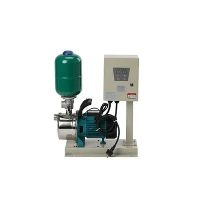
In the world of pumping systems, the choice between a Variable Frequency Drive (VFD) pump and a traditional pump is a crucial decision that can significantly impact energy consumption, operational costs, and overall efficiency. As a supplier of VFD pumps, I have witnessed firsthand the transformative power of this technology in various industries. In this blog post, I will delve into the power consumption differences between VFD pumps and traditional pumps, exploring the benefits and applications of each.
Understanding Traditional Pumps
Traditional pumps, also known as fixed-speed pumps, operate at a constant speed determined by the frequency of the electrical supply. These pumps are designed to deliver a specific flow rate and pressure, regardless of the actual demand. As a result, they often run at full capacity, even when the system requires less flow or pressure. This inefficiency can lead to excessive energy consumption and increased operating costs.
One of the main drawbacks of traditional pumps is their inability to adjust to changing system conditions. For example, in a water supply system, the demand for water may vary throughout the day, depending on factors such as time of day, weather conditions, and occupancy levels. A traditional pump will continue to operate at full speed, even when the demand for water is low, resulting in wasted energy.
Another issue with traditional pumps is their tendency to cause water hammer, a phenomenon that occurs when the flow of water is suddenly stopped or reversed. Water hammer can cause damage to the pump, pipes, and other components of the system, leading to costly repairs and downtime.


Introducing Variable Frequency Drive Pumps
Variable Frequency Drive pumps, on the other hand, are designed to adjust their speed and power consumption based on the actual demand of the system. These pumps use a variable frequency drive, which is an electronic device that controls the speed of the motor by adjusting the frequency of the electrical supply. By varying the speed of the motor, the pump can deliver the exact amount of flow and pressure required by the system, resulting in significant energy savings.
One of the key advantages of VFD pumps is their ability to operate at partial load conditions. When the demand for flow or pressure is low, the VFD pump can reduce its speed and power consumption accordingly. This not only saves energy but also extends the lifespan of the pump and other components of the system.
Another benefit of VFD pumps is their ability to eliminate water hammer. By gradually adjusting the speed of the motor, the pump can prevent sudden changes in flow and pressure, reducing the risk of damage to the system.
Power Consumption Comparison
To understand the power consumption differences between VFD pumps and traditional pumps, let's consider a real-world example. Suppose we have a water supply system that requires a flow rate of 50 gallons per minute (GPM) and a pressure of 50 pounds per square inch (PSI). We will compare the power consumption of a traditional pump and a VFD pump under different operating conditions.
Scenario 1: Full Load Operation
In this scenario, both the traditional pump and the VFD pump are operating at full capacity to meet the demand for 50 GPM and 50 PSI. The traditional pump is a fixed-speed pump that operates at a constant speed of 3,600 revolutions per minute (RPM) and consumes 10 kilowatts (kW) of power. The VFD pump, on the other hand, is a variable-speed pump that can adjust its speed based on the demand. At full load, the VFD pump operates at a speed of 3,600 RPM and consumes 9 kW of power.
In this scenario, the VFD pump consumes 10% less power than the traditional pump. This may not seem like a significant difference, but over time, it can add up to substantial energy savings.
Scenario 2: Partial Load Operation
In this scenario, the demand for water has decreased to 25 GPM and 25 PSI. The traditional pump continues to operate at full speed, consuming 10 kW of power, even though it is delivering only half of the required flow and pressure. The VFD pump, on the other hand, adjusts its speed to match the demand, operating at a speed of 1,800 RPM and consuming only 2.5 kW of power.
In this scenario, the VFD pump consumes 75% less power than the traditional pump. This significant reduction in power consumption is due to the ability of the VFD pump to operate at partial load conditions, which is not possible with a traditional pump.
Benefits of Variable Frequency Drive Pumps
The power consumption savings of VFD pumps are just one of the many benefits of this technology. Here are some other advantages of using VFD pumps:
- Energy Efficiency: As we have seen, VFD pumps can significantly reduce energy consumption by adjusting their speed and power consumption based on the actual demand of the system. This not only saves money on energy bills but also reduces the carbon footprint of the operation.
- Improved System Performance: VFD pumps can improve the performance of the system by providing a more consistent flow and pressure. This can lead to better process control, reduced downtime, and improved product quality.
- Extended Equipment Lifespan: By operating at lower speeds and reducing the stress on the pump and other components of the system, VFD pumps can extend the lifespan of the equipment. This can result in lower maintenance costs and fewer replacements over time.
- Reduced Noise and Vibration: VFD pumps operate at lower speeds, which can reduce noise and vibration levels. This can create a more comfortable working environment and reduce the risk of damage to the system.
- Enhanced Control and Monitoring: VFD pumps can be easily integrated with control systems, allowing for remote monitoring and adjustment of the pump's speed and performance. This can improve system efficiency and reduce the need for manual intervention.
Applications of Variable Frequency Drive Pumps
VFD pumps are suitable for a wide range of applications, including:
- Water Supply and Distribution: VFD pumps are commonly used in water supply and distribution systems to maintain a constant pressure and flow rate. By adjusting the speed of the pump based on the demand, VFD pumps can ensure a reliable and efficient water supply.
- HVAC Systems: VFD pumps are used in heating, ventilation, and air conditioning (HVAC) systems to circulate water or refrigerant. By adjusting the speed of the pump based on the load, VFD pumps can improve the energy efficiency of the HVAC system and reduce operating costs.
- Industrial Processes: VFD pumps are used in various industrial processes, such as chemical manufacturing, food and beverage production, and oil and gas refining. By providing a precise and consistent flow of fluid, VFD pumps can improve the quality and efficiency of the manufacturing process.
- Irrigation Systems: VFD pumps are used in irrigation systems to deliver water to crops. By adjusting the speed of the pump based on the soil moisture level and the weather conditions, VFD pumps can ensure that the crops receive the right amount of water at the right time, reducing water waste and improving crop yields.
Conclusion
In conclusion, the power consumption of a Variable Frequency Drive pump is significantly lower than that of a traditional pump, especially under partial load conditions. By adjusting their speed and power consumption based on the actual demand of the system, VFD pumps can provide substantial energy savings, improve system performance, extend equipment lifespan, and reduce noise and vibration levels. As a supplier of VFD pumps, I am committed to providing high-quality products and solutions that help our customers reduce their energy consumption and operating costs.
If you are interested in learning more about our Frequency Drive Constant Pressure Water Pump, 60HZ Frequency Conversion Water Pump, or Integrated Frequency Conversion Water Pump, please contact us to discuss your specific requirements. We look forward to working with you to find the best pumping solution for your needs.
References
- "Variable Frequency Drives: A Guide to Energy Efficiency and Cost Savings." U.S. Department of Energy, 2021.
- "Pump System Assessment Tool." Hydraulic Institute, 2021.
- "Energy Efficiency in Pumping Systems." European Pump Manufacturers Association, 2021.