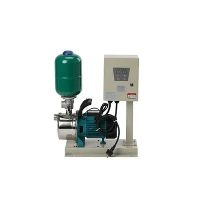
Hey there! As a supplier of Variable Frequency Drive (VFD) Pumps, I've seen firsthand the huge impact these pumps can have on energy savings. So, let's dig into what the energy - saving effect of a Variable Frequency Drive Pump really is.
First off, let me give you a quick lowdown on what a VFD pump is. A Variable Frequency Drive Pump uses advanced technology to adjust the speed of the pump motor according to the actual demand. Unlike traditional pumps that run at a fixed speed all the time, VFD pumps can change their speed, which is super important when it comes to energy consumption.
You see, in many industrial and commercial applications, the demand for water or other fluids isn't constant. For example, in a building's water supply system, the water demand varies throughout the day. During peak hours, like in the morning when people are getting ready for work or school, there's a high demand for water. But during off - peak hours, the demand drops significantly.
A traditional pump would keep running at full speed regardless of the demand. This means it's using a lot of energy even when it doesn't need to. On the other hand, a Variable Frequency Drive Water Pump can slow down when the demand is low. When the demand increases, it can speed up to meet the requirements. This ability to adjust the speed based on demand is the key to its energy - saving effect.
Let's talk about the science behind it. The power consumption of a pump is related to the cube of its speed. That's a pretty significant relationship. What it means is that even a small reduction in the pump's speed can lead to a large decrease in power consumption. For example, if you reduce the speed of a pump by 20%, the power consumption can be reduced by about 50%. That's a massive saving!
In a real - world scenario, let's say you have a factory that uses a pump to circulate cooling water. The cooling demand varies depending on the production level. With a traditional pump, it would run at full speed all the time, consuming a lot of electricity. But if you switch to a Frequency Conversion Constant Pressure Water Pump, it can adjust its speed based on the actual cooling demand. During periods of low production, the pump can slow down, using much less energy.
Another advantage of VFD pumps is that they can maintain a more stable pressure. In a system where constant pressure is required, like in a water supply network, a VFD pump can adjust its speed to keep the pressure steady. This not only improves the performance of the system but also helps in energy savings. Traditional pumps often have to use valves to control the flow and pressure, which can cause energy losses. VFD pumps eliminate the need for these valves in many cases, reducing energy waste.
Let's look at some numbers to really drive the point home. A study showed that in a commercial building's water supply system, replacing traditional pumps with VFD pumps can result in energy savings of up to 30 - 50%. In industrial applications, the savings can be even higher, especially in processes where the demand varies widely.
The energy - saving effect of VFD pumps also has a positive impact on the environment. By using less electricity, we're reducing the demand for power generation, which in turn means less fossil fuel consumption and lower greenhouse gas emissions. It's a win - win situation for both your business's bottom line and the planet.
Now, you might be wondering about the cost. Sure, VFD pumps can be more expensive upfront compared to traditional pumps. But when you consider the long - term energy savings, the payback period is usually quite short. In most cases, the energy savings can cover the additional cost of the VFD pump within a couple of years.
Moreover, VFD pumps also have a longer lifespan. Since they don't run at full speed all the time, there's less wear and tear on the motor and other components. This means fewer maintenance costs and less downtime for your system.
In addition to the energy - saving and cost - effectiveness, VFD pumps offer better control and flexibility. You can easily adjust the pump's speed and performance according to your specific needs. This is especially useful in applications where the demand pattern changes frequently, such as in a water treatment plant or a food processing facility.
A VSD Frequency Conversion Water Pump is also more reliable. It can protect the motor from overloading and other electrical problems. The advanced control system in VFD pumps can detect abnormal conditions and take corrective actions, preventing damage to the pump and ensuring continuous operation.
So, if you're still using traditional pumps in your business, it's definitely worth considering switching to VFD pumps. Not only will you save a significant amount of money on energy costs, but you'll also improve the performance and reliability of your system.
If you're interested in learning more about our Variable Frequency Drive Pumps or are thinking about making a purchase, I'd love to have a chat with you. We can discuss your specific needs and how our pumps can best fit into your system. Don't hesitate to reach out and start the conversation about how we can help you achieve better energy efficiency and cost savings.
References


- "Energy - Efficient Pumping Systems: A Guide for Industry", U.S. Department of Energy
- "Variable Frequency Drives for Pump Applications", Hydraulic Institute