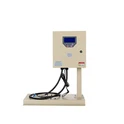
Hey there! As a supplier of household water pump controllers, I've gotten a ton of questions about the difference between mechanical and electronic controllers. So, I thought I'd break it down for you in this blog post.
Let's start with mechanical water pump controllers. These are the old - school type of controllers that have been around for ages. They're pretty simple in design and function, which is both a pro and a con.
How Mechanical Controllers Work
Mechanical controllers use physical components like springs and diaphragms to control the operation of the water pump. When the water pressure in the system changes, the diaphragm moves, and this movement is transferred to a switch through a series of mechanical linkages. For example, when the water pressure drops below a certain set point, the diaphragm moves in one direction, and this causes the switch to close, turning the pump on. When the pressure reaches the upper set point, the diaphragm moves back, and the switch opens, turning the pump off.
Advantages of Mechanical Controllers
One of the biggest advantages of mechanical controllers is their simplicity. There are fewer parts that can break, and they're generally easier to understand and troubleshoot. If you're a DIY - type person, you can often fix a mechanical controller yourself with just a basic set of tools. They're also relatively inexpensive compared to their electronic counterparts. This makes them a great option for budget - conscious consumers or for applications where cost is a major factor.
Disadvantages of Mechanical Controllers
However, mechanical controllers do have some drawbacks. They're not as accurate as electronic controllers. The set points for turning the pump on and off can drift over time due to wear and tear on the mechanical components. This means that the pump might turn on or off at the wrong pressure, which can lead to inefficient operation and potentially damage the pump. Also, they're not very flexible. Once the set points are adjusted, it's difficult to change them without physically modifying the controller.
Now, let's move on to electronic water pump controllers. These are the more modern option and bring a lot of new features to the table.


How Electronic Controllers Work
Electronic controllers use sensors and microprocessors to monitor and control the water pump. The sensors measure the water pressure and send this information to the microprocessor. The microprocessor then analyzes the data and decides whether to turn the pump on or off based on pre - programmed settings. For instance, you can set the controller to turn the pump on when the pressure drops to 20 psi and turn it off when it reaches 50 psi.
Advantages of Electronic Controllers
The biggest advantage of electronic controllers is their accuracy. They can maintain very precise set points, ensuring that the pump operates at the optimal pressure all the time. This leads to more efficient water usage and can extend the life of the pump. They're also highly flexible. You can easily adjust the set points, the operating mode (like continuous or intermittent operation), and other parameters using a digital interface or a remote control. Some electronic controllers even come with advanced features like dry - run protection and automatic restart after a power outage.
Disadvantages of Electronic Controllers
The main downside of electronic controllers is their cost. They're generally more expensive than mechanical controllers because of the advanced technology they use. Additionally, they're more complex, which means that if something goes wrong, it can be more difficult to troubleshoot and repair. You may need to have some technical knowledge or call in a professional to fix an electronic controller.
Let's take a quick look at some of the products we offer that showcase both types of controllers.
If you're interested in a more traditional option, our Factory Water Pump Switch is a great mechanical controller. It's reliable, easy to install, and won't break the bank.
For those who want the latest technology and advanced features, our Wide Voltage Water Pump Controller is a top - notch electronic controller. It can handle a wide range of input voltages, making it suitable for different electrical systems.
We also have a 24V DC Water Pump Switch, which is perfect for specific low - voltage applications. It's available in both mechanical and electronic versions, so you can choose the one that best suits your needs.
So, which one should you choose? Well, it depends on your specific requirements. If you're on a tight budget, need a simple and reliable solution, and don't mind a bit of inaccuracy, a mechanical controller might be the way to go. On the other hand, if you want precision, flexibility, and advanced features, and you're willing to pay a bit more, an electronic controller is the better option.
If you're still unsure which type of water pump controller is right for you, don't hesitate to reach out. We're here to help you make the best decision for your household water system. Whether you're a homeowner looking to replace an old controller or a contractor working on a new installation, we've got the expertise and the products to meet your needs.
Let's start a conversation about your water pump controller needs. We can discuss the pros and cons in more detail and find the perfect solution for you.
References
- "Water Pump Control Systems: A Comprehensive Guide", Industry Press, 2020
- "Mechanical vs Electronic Devices in Home Appliances", Home Tech Journal, 2021