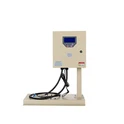
As a supplier of 380V water pump inverters, I often receive inquiries about the power factor of these devices. Understanding the power factor of a 380V water pump inverter is crucial for both energy efficiency and system performance. In this blog post, I will delve into the concept of power factor, explain its significance in the context of 380V water pump inverters, and provide insights into how it can impact your operations.
What is Power Factor?
Power factor is a measure of how effectively electrical power is being used in an AC (alternating current) circuit. It is defined as the ratio of real power (P), which is the power that actually does useful work, to apparent power (S), which is the product of the voltage and current in the circuit. Mathematically, power factor (PF) is expressed as:


PF = P / S
The power factor ranges from 0 to 1, with a value of 1 indicating that all the electrical power is being used effectively, and a value of 0 indicating that no useful work is being done. In practical terms, a low power factor means that a significant portion of the electrical power is being wasted in the form of reactive power (Q), which is the power that oscillates between the source and the load without doing any useful work.
Why is Power Factor Important for 380V Water Pump Inverters?
In the context of 380V water pump inverters, power factor plays a crucial role in several aspects:
Energy Efficiency
A high power factor means that the inverter is using electrical power more efficiently, which translates into lower energy consumption and reduced electricity bills. By minimizing the amount of reactive power, the inverter can deliver more real power to the water pump, resulting in improved energy efficiency.
System Performance
A low power factor can cause voltage drops and power losses in the electrical system, which can affect the performance of the water pump and other connected equipment. By maintaining a high power factor, the inverter can ensure stable voltage levels and reliable operation of the water pump, reducing the risk of equipment damage and downtime.
Compliance with Regulations
In many countries, there are regulations in place that require industrial and commercial users to maintain a certain power factor level. By using a 380V water pump inverter with a high power factor, you can ensure compliance with these regulations and avoid potential penalties.
Factors Affecting the Power Factor of a 380V Water Pump Inverter
Several factors can affect the power factor of a 380V water pump inverter, including:
Load Characteristics
The power factor of the inverter is influenced by the characteristics of the load, such as the type of motor used in the water pump, the operating conditions, and the load profile. For example, a motor with a high inductance will have a lower power factor than a motor with a low inductance.
Inverter Design
The design of the inverter can also have a significant impact on the power factor. Modern inverters are designed to have a high power factor by using advanced control algorithms and power electronics components. However, the power factor can still be affected by factors such as the switching frequency, the modulation technique, and the efficiency of the inverter.
Electrical System Conditions
The power factor of the inverter can also be affected by the electrical system conditions, such as the voltage level, the frequency, and the presence of harmonics. For example, a low voltage level can cause the inverter to draw more current, which can result in a lower power factor.
How to Improve the Power Factor of a 380V Water Pump Inverter
There are several ways to improve the power factor of a 380V water pump inverter, including:
Use a High-Power-Factor Inverter
When selecting a 380V water pump inverter, it is important to choose a model that has a high power factor. Modern inverters are designed to have a power factor of 0.95 or higher, which can significantly improve energy efficiency and system performance.
Install Power Factor Correction Equipment
Power factor correction equipment, such as capacitors, can be installed in the electrical system to compensate for the reactive power and improve the power factor. These devices work by storing and releasing electrical energy at the appropriate times to reduce the amount of reactive power in the system.
Optimize the Load
By optimizing the load on the water pump, you can reduce the amount of reactive power and improve the power factor. This can be achieved by using a variable frequency drive (VFD) to control the speed of the motor, which can match the output of the pump to the actual demand.
Conclusion
In conclusion, the power factor of a 380V water pump inverter is an important factor that can have a significant impact on energy efficiency, system performance, and compliance with regulations. By understanding the concept of power factor, the factors that affect it, and the ways to improve it, you can make informed decisions when selecting and operating a 380V water pump inverter.
If you are in the market for a high-quality 380V water pump inverter, we are here to help. As a leading supplier of Variable Frequency Pump Converter for Home Use, Variable Frequency Pump Constant Voltage Controller, and Water Pump Inverter, we offer a wide range of products that are designed to meet your specific needs. Contact us today to learn more about our products and how we can help you improve the efficiency and performance of your water pump system.
References
- Electric Power Systems Quality, by Roger C. Dugan, Mark F. McGranaghan, and Surya Santoso
- Power Electronics: Converters, Applications, and Design, by Ned Mohan, Tore M. Undeland, and William P. Robbins
- Electrical Installation Calculations, by Iain Macdonald