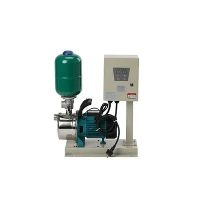
Hey there! As a supplier of household water pump controllers, I've often been asked about the difference between domestic and industrial water pump controllers. So, let's dive right in and break it down.
1. Usage Scenarios
First off, the usage scenarios for domestic and industrial water pump controllers are like night and day.
Domestic Use
In a domestic setting, water pump controllers are mainly used for things like supplying water to homes. You know, getting water from a well to your taps, toilets, and showers. They're also used in small - scale irrigation for home gardens. For example, if you've got a little vegetable patch in your backyard, a domestic water pump controller can help regulate the water flow for watering your plants. These controllers need to be reliable but don't have to handle huge volumes of water. They're designed to meet the daily water needs of a family, which is usually in the range of a few hundred to a couple of thousand liters per day.
Industrial Use
On the other hand, industrial water pump controllers are used in large - scale operations. Think about factories that need water for manufacturing processes, power plants that use water for cooling, or large - scale agricultural irrigation over vast fields. In these cases, the water requirements are massive. An industrial controller might be responsible for moving thousands or even millions of liters of water every day. They have to work non - stop in many cases, ensuring a continuous supply of water to keep the industrial processes running smoothly.
2. Capacity and Performance
The capacity and performance of these two types of controllers also differ significantly.
Domestic Capacity and Performance
Domestic water pump controllers are generally designed for lower flow rates and pressures. The flow rate of a typical domestic controller might be anywhere from 5 to 50 liters per minute. The pressure they can handle is usually in the range of 1 - 10 bar. These controllers are built to be energy - efficient since most homeowners are concerned about their electricity bills. They're also relatively quiet, so they don't cause a nuisance in a home environment. For instance, a Clean Pump Controller with European Plug is a great option for domestic use. It's designed to work well within the typical domestic water supply requirements.
Industrial Capacity and Performance
Industrial water pump controllers, however, are beasts in terms of capacity and performance. They can handle much higher flow rates, often starting from 100 liters per minute and going up to thousands of liters per minute. The pressure they can generate and handle is also much higher, sometimes exceeding 100 bar. These controllers are built to be robust and can withstand harsh operating conditions. They're often made of heavy - duty materials that can resist corrosion, wear, and tear. They may also have advanced features like remote monitoring and control, allowing operators to manage the water supply from a central location.
3. Design and Complexity
The design and complexity of domestic and industrial water pump controllers are quite different.
Domestic Design and Complexity
Domestic controllers are usually simple in design. They're easy to install and operate. Most homeowners can install a domestic water pump controller with just a basic knowledge of plumbing and electricity. They often come with pre - set settings that are easy to adjust. For example, you can easily set the pressure at which the pump should start and stop. The controls are straightforward, and there aren't too many complicated functions. A High Quality Water Pump Controller for domestic use is designed with user - friendliness in mind.
Industrial Design and Complexity
Industrial water pump controllers, in contrast, are highly complex. They have multiple sensors, advanced control algorithms, and sophisticated communication interfaces. These controllers need to be able to integrate with other industrial systems, such as automation systems and monitoring networks. They may have to communicate with a variety of other equipment in the industrial facility. For example, they might need to adjust the water flow based on the temperature readings from a manufacturing process. The installation of an industrial controller often requires a team of experts, including engineers and technicians, to ensure proper setup and calibration.
4. Durability and Maintenance
Durability and maintenance requirements are also areas where domestic and industrial water pump controllers differ.
Domestic Durability and Maintenance
Domestic controllers are designed to last for several years under normal use. They usually have a relatively simple maintenance schedule. Homeowners can often perform basic maintenance tasks themselves, like checking the connections and cleaning the filter. The components are generally easy to access and replace if needed. For example, if a small part like a pressure switch fails, it can usually be replaced with a new one without too much hassle.
Industrial Durability and Maintenance
Industrial water pump controllers are built to last in a tough environment. They're made of high - quality materials that can withstand high temperatures, vibrations, and chemical exposure. However, the maintenance of these controllers is much more involved. It often requires regular inspections by trained professionals. The components are more complex and expensive to replace. In some cases, maintenance might involve shutting down the entire industrial process, which can be costly in terms of lost production time.
5. Cost
Cost is another factor that sets domestic and industrial water pump controllers apart.


Domestic Cost
Domestic water pump controllers are generally more affordable. The price can range from a few dollars to a couple of hundred dollars, depending on the features and brand. Since they're designed for home use, they don't need to have all the advanced features of an industrial controller, which keeps the cost down. This makes them accessible to most homeowners.
Industrial Cost
Industrial water pump controllers, on the other hand, can be extremely expensive. The cost can run into thousands or even tens of thousands of dollars. This is due to the high - end components, advanced technology, and the need for high - performance. The installation and maintenance costs also add to the overall expense.
Conclusion
So, there you have it - the main differences between domestic and industrial water pump controllers. Whether you're a homeowner looking for a reliable water supply for your home or an industrial operator in need of a high - performance controller, it's important to choose the right one for your needs.
If you're in the market for a household water pump controller, we've got a great selection, including the Water Pump Pressure Controller with CE TUV Certificate. Our controllers are designed to be efficient, reliable, and easy to use. If you have any questions or are interested in purchasing, feel free to reach out for a chat about your requirements. We're always happy to help you find the perfect water pump controller for your home.
References
- "Water Pump Handbook" by Cameron Hydraulic Data
- Industry reports on water pump technology and applications