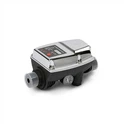
A water pump VFD (Variable Frequency Drive) inverter plays a crucial role in a hot water pumping system. As a dedicated water pump VFD inverter supplier, I've had the opportunity to understand the ins and outs of what makes an ideal inverter for such systems. In this blog, I'll delve into the key requirements for a water pump VFD inverter in a hot water pumping system.
1. Temperature Resistance
Hot water pumping systems operate with water at elevated temperatures. The inverter needs to be able to withstand these high - temperature environments without suffering from performance degradation or component failure. The internal components of the inverter, such as capacitors, resistors, and semiconductor devices, are sensitive to heat. A good water pump VFD inverter should have a high - temperature rating. For example, it should be able to operate efficiently in an environment where the ambient temperature can reach up to 50 - 60 degrees Celsius. Special heat - dissipation mechanisms, like high - performance heat sinks and fans, are essential. These help to transfer the heat generated by the inverter's operation away from the sensitive components, ensuring stable performance. If an inverter cannot handle the heat, it may experience overheating, which can lead to system shutdowns, reduced lifespan of components, and potential safety hazards.
2. Pressure and Flow Rate Control
In a hot water pumping system, maintaining the right pressure and flow rate is of utmost importance. The water pump VFD inverter should be capable of precise control over these parameters. It needs to adjust the speed of the water pump motor based on the real - time demand for hot water. For instance, during peak usage hours in a large building, the inverter should increase the pump speed to maintain a constant pressure and sufficient flow rate. Conversely, during low - demand periods, it should reduce the pump speed to save energy. Advanced inverters use algorithms and sensors to continuously monitor the pressure and flow rate in the system. They can then make rapid adjustments to the motor speed to ensure that the hot water is delivered at the desired pressure and flow. This not only improves the efficiency of the hot water system but also enhances the user experience, as there are no sudden drops or surges in water pressure.
3. Energy Efficiency
Energy efficiency is a major concern in any pumping system, and hot water pumping systems are no exception. A water pump VFD inverter should be designed to minimize energy consumption. By adjusting the motor speed according to the actual demand, the inverter can significantly reduce the power consumption of the water pump. Traditional fixed - speed pumps often run at full capacity all the time, even when the demand for hot water is low. This leads to a lot of wasted energy. In contrast, a VFD inverter can operate the pump at a lower speed when less hot water is needed, which reduces the power drawn from the electrical grid. Additionally, modern inverters use advanced power electronics and control algorithms to optimize the energy conversion process. They can improve the power factor of the system, which further reduces energy losses and saves on electricity costs. For a commercial hot water pumping system, the energy savings achieved by using a high - efficiency VFD inverter can be substantial over time.
4. Compatibility with Pump Motors
The water pump VFD inverter must be compatible with the type of pump motor used in the hot water pumping system. There are different types of motors, such as single - phase and three - phase motors. The inverter should be able to work seamlessly with the specific motor in the system. For single - phase motors, New Single - phase Water Pump Inverter offers a great solution. It is designed to provide the right amount of power and control for single - phase water pump motors. In the case of three - phase motors, the inverter needs to have the appropriate output voltage and frequency range to match the motor's requirements. Compatibility also extends to the motor's power rating. The inverter should be sized correctly for the motor, neither too small to handle the motor's load nor too large, which would be inefficient.
5. Protection Features
A reliable water pump VFD inverter should be equipped with a range of protection features. Over - current protection is essential to prevent damage to the inverter and the pump motor in case of a sudden increase in current. This can occur due to a short - circuit in the system or a mechanical jam in the pump. Over - voltage and under - voltage protection safeguard the inverter from voltage fluctuations in the electrical supply. These fluctuations can be caused by power grid issues or other electrical equipment in the vicinity. Thermal protection is also crucial, as mentioned earlier. It monitors the temperature of the inverter and shuts down the system if the temperature exceeds a safe limit to prevent damage. In addition, some inverters have protection against phase loss, which can occur if one of the phases in a three - phase power supply fails.
6. User - Friendly Interface
For easy installation, operation, and maintenance, a water pump VFD inverter should have a user - friendly interface. A clear and intuitive display allows operators to monitor the system's parameters, such as motor speed, pressure, and flow rate. The New LCD Display Inverter provides an excellent example of an inverter with a modern and easy - to - read display. It also enables users to set and adjust various parameters, such as the target pressure and flow rate. The interface should be accessible to both trained technicians and less - technical users. This ensures that the hot water pumping system can be operated and maintained effectively, even in different settings.


7. Communication and Monitoring Capabilities
In today's connected world, communication and monitoring capabilities are becoming increasingly important for water pump VFD inverters. The inverter should be able to communicate with other components in the hot water system, such as sensors and control panels. It can also be integrated into a building management system (BMS) for centralized control and monitoring. This allows facility managers to remotely monitor the performance of the hot water pumping system, receive alerts in case of any issues, and make adjustments as needed. Some inverters support communication protocols like Modbus, Profibus, or Ethernet, which enable seamless integration with other devices. The Variable Frequency Pump Constant Voltage Controller is designed with such advanced communication features, making it a great choice for modern hot water pumping systems.
Conclusion
The requirements for a water pump VFD inverter in a hot water pumping system are diverse and complex. From temperature resistance and precise control of pressure and flow rate to energy efficiency, compatibility, protection features, user - friendly interface, and communication capabilities, every aspect plays a vital role in ensuring the smooth and efficient operation of the system. As a water pump VFD inverter supplier, I am committed to providing high - quality inverters that meet all these requirements. If you are in the market for a water pump VFD inverter for your hot water pumping system, I encourage you to reach out to us. We can offer professional advice and solutions tailored to your specific needs. Contact us to start a procurement discussion and find the perfect inverter for your hot water system.
References
- "Variable Frequency Drives in Pumping Systems" by the Hydraulic Institute.
- "Energy - Efficient Pumping Systems" published by the U.S. Department of Energy.
- Technical manuals of various water pump VFD inverter manufacturers.