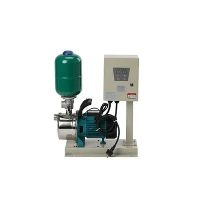
Hey there! As a supplier of Household Water Pump Controllers, I've seen firsthand the different needs and applications when it comes to using these controllers with booster pumps and normal pumps. In this blog, I'll break down the key differences to help you understand which setup might be best for your situation.
How a Normal Pump Works and Its Controller Use
Let's start with normal pumps. These are the ones you typically find in basic water supply systems around the house. A normal pump is designed to move water from a source, like a well or a storage tank, to where it's needed, such as faucets, toilets, or washing machines.
When it comes to using a Household Water Pump Controller [/pump-controller/water-pump-pressure-controller/household-water-pump-controller.html] with a normal pump, the main goal is to regulate the pump's operation based on the water pressure in the system. For example, when you turn on a faucet, the water pressure in the pipes drops. The controller senses this drop and signals the pump to start running. Once the water pressure reaches a certain set level, the controller tells the pump to stop.
One of the most common types of controllers for normal pumps is the Automatic Pump Pressure Switch [/pump-controller/water-pump-pressure-controller/automatic-pump-pressure-switch.html]. This simple yet effective device monitors the pressure in the water system and automatically turns the pump on and off. It's a great option for basic residential water systems because it's easy to install and maintain.
However, normal pumps usually have a limited capacity in terms of the pressure they can generate and the volume of water they can move. So, if you have a large house or need to pump water over a long distance or to a high elevation, a normal pump might not be enough.
The Role of Booster Pumps and Their Controller Needs
This is where booster pumps come in. A booster pump is designed to increase the water pressure in a system. It's often used in situations where the existing water pressure is too low, such as in high - rise buildings, large homes with multiple water outlets, or areas with low municipal water pressure.
When using a Household Water Pump Controller with a booster pump, the requirements are a bit different. Booster pumps need to be able to handle higher pressures and flow rates. The controller for a booster pump has to be more sophisticated to ensure that the pump operates efficiently and safely.
For example, a booster pump might need to be able to adjust its speed based on the demand for water. If there are only a few faucets open, the pump can run at a lower speed to save energy. But when multiple water outlets are in use simultaneously, the pump needs to ramp up its speed to maintain the required pressure.
An LCD Pump Pressure Switch [/pump-controller/water-pump-pressure-controller/lcd-pump-pressure-switch.html] can be a great choice for a booster pump. It provides a clear display of the pressure and other operating parameters, allowing you to easily monitor and adjust the pump's performance. Some advanced LCD switches can also be programmed to adapt to different water usage patterns, making them very versatile.


Key Differences in Controller Functionality
Pressure Range
The pressure range that a controller needs to handle is a major difference between using it with a booster pump and a normal pump. Normal pumps typically operate within a relatively low - pressure range, usually between 20 - 60 psi (pounds per square inch). The controller for a normal pump is calibrated to this range and is designed to turn the pump on and off at appropriate pressure points within this range.
On the other hand, booster pumps can generate much higher pressures, sometimes up to 100 psi or more. The controller for a booster pump has to be able to accurately measure and control these higher pressures. It also needs to be able to handle sudden changes in pressure, which can occur when multiple water outlets are opened or closed at once.
Flow Rate Control
Flow rate is another important factor. Normal pumps usually have a fixed flow rate, which means they move a certain amount of water per minute. The controller for a normal pump mainly focuses on maintaining the pressure based on this fixed flow rate.
Booster pumps, however, often have variable flow rates. The controller for a booster pump needs to be able to adjust the pump's speed to control the flow rate according to the demand. This requires more advanced control algorithms and sensors to accurately measure the flow and adjust the pump's operation accordingly.
Energy Efficiency
Energy efficiency is a growing concern for homeowners. When using a normal pump, the energy consumption is relatively straightforward. The pump runs at a fixed speed, and the controller simply turns it on and off. While this is efficient for basic water supply needs, there's not much room for optimization.
Booster pumps, with their variable speed capabilities, can be much more energy - efficient. The controller for a booster pump can adjust the pump's speed based on the actual water demand. For example, during periods of low water usage, the pump can run at a lower speed, consuming less energy. This not only saves money on electricity bills but also reduces the wear and tear on the pump.
Installation and Maintenance Considerations
Installation
Installing a controller for a normal pump is usually a simpler process. Since normal pumps are typically used in smaller, more straightforward water systems, the controller can be easily connected to the pump and the water pipes. The wiring is usually less complex, and the setup doesn't require as much technical knowledge.
Installing a controller for a booster pump, on the other hand, can be more involved. Booster pumps often require additional components, such as pressure sensors, flow meters, and variable frequency drives. The controller needs to be integrated with these components, and the wiring and programming can be more complex. It's often a good idea to have a professional install a booster pump controller to ensure that it's set up correctly.
Maintenance
Maintenance is also different for the two types of controllers. Normal pump controllers are generally more durable and require less maintenance. They usually just need to be checked periodically to make sure the pressure settings are correct and the electrical connections are secure.
Booster pump controllers, with their more advanced features and components, may require more frequent maintenance. The sensors and variable frequency drives need to be calibrated regularly to ensure accurate operation. The display on an LCD Pump Pressure Switch may also need to be cleaned and checked for any signs of damage.
Which One Is Right for You?
If you have a small to medium - sized house with a basic water supply system, a normal pump with a simple Automatic Pump Pressure Switch might be all you need. It's cost - effective, easy to install, and requires minimal maintenance.
However, if you have a large house, a high - rise building, or experience low water pressure, a booster pump with a more advanced Household Water Pump Controller, like an LCD Pump Pressure Switch, is probably the better choice. It can provide the higher pressure and flow rates you need, while also offering energy - saving benefits and more precise control.
In conclusion, understanding the differences between using a Household Water Pump Controller with a booster pump and a normal pump is crucial for choosing the right setup for your needs. Whether you're looking to improve your home's water supply or upgrade an existing system, I'm here to help. If you're interested in learning more about our products or have any questions about which controller is right for you, feel free to reach out. We can have a detailed discussion and find the best solution for your specific situation. Let's work together to ensure you have a reliable and efficient water pumping system.
References
- Water Pump Handbook by A. J. Stepanoff
- Principles of Pumping Stations by D. A. Grist