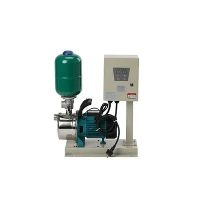
In the realm of water management systems, water pump frequency inverters have emerged as a pivotal technology, offering significant energy - saving potential. As a supplier of water pump frequency inverters, I've witnessed firsthand the transformative impact these devices can have on energy consumption and overall system efficiency. In this blog, we'll delve into the details of how much energy a water pump frequency inverter can save and why it's a smart investment for various applications.
Understanding Water Pump Frequency Inverters
Before we explore the energy - saving aspects, it's essential to understand what a water pump frequency inverter is. A water pump frequency inverter is an electronic device that controls the speed of an electric motor driving a water pump. By adjusting the frequency of the electrical power supplied to the motor, the inverter can vary the motor's speed, which in turn regulates the flow rate and pressure of the water pumped.
Traditional water pumps often operate at a fixed speed, which means they consume a constant amount of energy regardless of the actual demand for water. This can lead to significant energy wastage, especially when the water demand is low. In contrast, a water pump frequency inverter can adjust the pump's speed according to the real - time water demand, ensuring that the pump only uses the amount of energy necessary to meet that demand.
Factors Affecting Energy Savings
The amount of energy a water pump frequency inverter can save depends on several factors:


1. Load Variation
One of the most significant factors is the variation in the water load. If a water system experiences significant fluctuations in demand, such as in a commercial building where water usage varies throughout the day, a frequency inverter can make substantial energy savings. For example, during off - peak hours when the water demand is low, the inverter can slow down the pump, reducing its energy consumption. In a study conducted on a large hotel, it was found that by installing a water pump frequency inverter, the energy consumption of the water pumping system was reduced by up to 30% due to the ability to adjust the pump speed according to the varying guest occupancy and water usage patterns.
2. Pump Efficiency Curve
The efficiency curve of the pump also plays a crucial role. Most pumps are designed to operate at their highest efficiency at a specific speed and flow rate. When a pump operates at a fixed speed, it may not always be operating at its optimal efficiency point, especially when the demand deviates from the design conditions. A frequency inverter can adjust the pump speed to keep it closer to its peak efficiency point, thereby reducing energy consumption. For instance, if a pump has a peak efficiency at a flow rate of 50 m³/h and the actual demand varies between 20 - 80 m³/h, the inverter can adjust the speed to ensure that the pump operates as close to the 50 m³/h flow rate as possible, depending on the demand.
3. System Design
The overall design of the water system, including the pipe layout, valves, and fittings, can impact energy savings. A well - designed system with minimal friction losses and proper valve settings can enhance the energy - saving potential of a frequency inverter. For example, if the pipes are sized correctly and the valves are adjusted to minimize pressure drops, the pump will require less energy to move the water. In some industrial water supply systems, optimizing the system design in conjunction with the installation of a frequency inverter has led to energy savings of up to 40%.
Calculating Energy Savings
To estimate the energy savings of a water pump frequency inverter, we can use the affinity laws. These laws describe the relationship between the speed, flow rate, pressure, and power consumption of a centrifugal pump. The key affinity laws relevant to energy savings are:
- The flow rate (Q) is proportional to the speed (N): (Q_1/Q_2 = N_1/N_2)
- The pressure (H) is proportional to the square of the speed: (H_1/H_2=(N_1/N_2)^2)
- The power (P) is proportional to the cube of the speed: (P_1/P_2=(N_1/N_2)^3)
Let's assume we have a pump operating at a speed (N_1) with a power consumption (P_1). If we reduce the speed to (N_2), the new power consumption (P_2) can be calculated using the third affinity law. For example, if we reduce the pump speed by 20% (i.e., (N_2 = 0.8N_1)), the new power consumption (P_2=(0.8)^3P_1 = 0.512P_1). This means that by reducing the speed by 20%, we can potentially save almost 49% of the energy.
However, in real - world applications, the actual energy savings may be lower due to factors such as inverter losses, motor inefficiencies at lower speeds, and system losses. But even with these considerations, significant energy savings can still be achieved.
Real - World Examples of Energy Savings
In different industries and applications, water pump frequency inverters have proven to be effective in saving energy.
Residential Buildings
In residential buildings, water pumps are used for various purposes, such as supplying water from a well or boosting water pressure. A frequency inverter can adjust the pump speed based on the household's water usage. For example, during the night when the water demand is very low, the pump can operate at a reduced speed, saving energy. In a typical single - family home, installing a 110V Water Pump Inverter Controller can result in annual energy savings of up to 20 - 25%.
Commercial Buildings
Commercial buildings, such as offices, shopping malls, and hotels, have high and variable water demands. A water pump frequency inverter can be integrated into the building's water supply system to adjust the pump speed according to the occupancy and water usage patterns. In an office building, for instance, the water demand is typically higher during business hours and lower during evenings and weekends. By using a frequency inverter, the pump can be slowed down during off - peak hours, leading to energy savings of around 30 - 35%.
Industrial Applications
In industrial settings, water pumps are used for processes such as cooling, washing, and transporting liquids. Industrial water systems often have large pumps with high energy consumption. By installing a High - Power Water Pump Inverter, industrial facilities can achieve significant energy savings. For example, in a manufacturing plant, the water demand for cooling processes may vary depending on the production schedule. A frequency inverter can adjust the pump speed to match the cooling requirements, resulting in energy savings of 35 - 45%.
Benefits Beyond Energy Savings
In addition to energy savings, water pump frequency inverters offer several other benefits:
1. Extended Pump Lifespan
By reducing the pump's operating speed during periods of low demand, the frequency inverter can reduce wear and tear on the pump components. This can extend the pump's lifespan and reduce maintenance costs. For example, less stress on the bearings and seals can prevent premature failure, saving on replacement parts and labor costs.
2. Improved System Performance
A frequency inverter can provide more precise control over the water flow rate and pressure, leading to improved system performance. This is particularly important in applications where accurate water supply is critical, such as in a hospital's water treatment system or a laboratory's water circulation system.
3. Reduced Noise and Vibration
Operating the pump at lower speeds can reduce noise and vibration levels. This is beneficial in residential and commercial settings where excessive noise can be a nuisance. For example, in an apartment building, a quieter water pump can improve the living environment for the residents.
Choosing the Right Water Pump Frequency Inverter
As a water pump frequency inverter supplier, I understand the importance of choosing the right inverter for your application. There are different types of inverters available, such as Wall - mounted Water Pump Inverter, which are suitable for small - to medium - sized applications, and high - power inverters for industrial use.
When selecting an inverter, consider the following factors:
- Power Rating: Ensure that the inverter has a power rating that matches the pump's motor power. An undersized inverter may not be able to control the pump effectively, while an oversized inverter can be more expensive and less efficient.
- Control Features: Look for inverters with advanced control features, such as PID control, which can automatically adjust the pump speed based on the water pressure or flow rate.
- Compatibility: Make sure the inverter is compatible with the pump's motor type (e.g., single - phase or three - phase) and the electrical system in your location.
Conclusion
Water pump frequency inverters offer significant energy - saving potential, with savings ranging from 20% to 45% depending on the application and operating conditions. These devices not only reduce energy consumption but also provide other benefits such as extended pump lifespan, improved system performance, and reduced noise.
If you're considering upgrading your water pumping system to save energy and improve efficiency, I encourage you to contact us to discuss your specific needs. Our team of experts can help you select the right water pump frequency inverter for your application and provide support throughout the installation and operation process.
References
- "Energy - Efficient Pumping Systems: A Guide for Industry", Department of Energy, USA
- "Pump Handbook", Igor Karassik et al.
- "Case Studies on Water Pump Frequency Inverter Applications", International Water Association