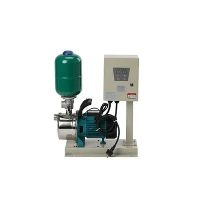
As a supplier of Water Pump Inverters, I've witnessed firsthand the transformative impact these devices have on water pump systems. In this blog, I'll delve into how a water pump inverter interacts with the pump's control system, exploring the technical details, benefits, and real - world applications.
Understanding the Basics of a Water Pump Inverter
A water pump inverter, also known as a variable frequency drive (VFD), is an electronic device that controls the speed of an electric motor driving a water pump. By adjusting the frequency and voltage supplied to the motor, the inverter can precisely regulate the pump's flow rate and pressure. This is in contrast to traditional fixed - speed pumps, which operate at a constant speed and often lead to inefficiencies and excessive wear and tear.
The Water Pump Inverter we supply is designed with advanced technology to ensure stable and reliable performance. It can adapt to different types of water pumps, including centrifugal pumps, submersible pumps, and booster pumps.
Interaction with the Pump's Control System
Sensor Inputs
The control system of a water pump typically relies on various sensors to monitor the operating conditions. These sensors can measure parameters such as pressure, flow rate, temperature, and liquid level. The water pump inverter receives signals from these sensors and uses them to adjust the motor speed accordingly.
For example, in a water supply system, a pressure sensor is installed at the outlet of the pump. When the water demand increases, the pressure in the system drops. The pressure sensor detects this change and sends a signal to the inverter. The inverter then increases the motor speed, which in turn increases the pump's flow rate and restores the pressure to the desired level.
Conversely, when the water demand decreases, the pressure rises. The sensor signals the inverter to reduce the motor speed, saving energy and preventing over - pressurization of the system.


Control Modes
Water pump inverters offer different control modes to suit various applications. The most common control modes include constant pressure control, constant flow control, and proportional - integral - derivative (PID) control.
- Constant Pressure Control: In this mode, the inverter adjusts the pump speed to maintain a constant pressure in the system. It is widely used in water supply systems for residential, commercial, and industrial buildings. Our 380V Three - Phase Pump Variable Frequency Drive is capable of precise constant pressure control, ensuring a stable water supply at all times.
- Constant Flow Control: This mode is used when a constant flow rate is required. The inverter monitors the flow rate using a flow sensor and adjusts the pump speed to keep the flow rate constant. It is commonly used in applications such as irrigation systems and industrial processes where a specific amount of water needs to be delivered.
- PID Control: PID control is a more advanced control strategy that combines proportional, integral, and derivative actions. It can handle complex system dynamics and disturbances more effectively. The inverter continuously calculates the error between the setpoint and the actual value of the controlled parameter (pressure or flow rate) and adjusts the motor speed to minimize this error.
Communication Protocols
Modern water pump inverters are equipped with communication interfaces that allow them to communicate with other devices in the control system. These interfaces support various communication protocols, such as Modbus, Profibus, and CANopen.
Through these communication protocols, the inverter can exchange data with a programmable logic controller (PLC), a human - machine interface (HMI), or a supervisory control and data acquisition (SCADA) system. This enables remote monitoring and control of the pump system, as well as data logging and analysis.
For instance, an operator can use an HMI to set the desired pressure or flow rate, monitor the pump's operating parameters in real - time, and receive alarms in case of abnormal conditions. The SCADA system can collect data from multiple pumps and inverters in a large - scale water supply network, providing a comprehensive overview of the system's performance.
Benefits of the Interaction
Energy Efficiency
One of the most significant benefits of using a water pump inverter in conjunction with the pump's control system is energy savings. By adjusting the motor speed according to the actual water demand, the inverter can reduce the energy consumption of the pump.
Traditional fixed - speed pumps often operate at full capacity even when the water demand is low. This results in wasted energy and increased operating costs. In contrast, a water pump inverter can reduce the motor speed during periods of low demand, consuming only the energy required to meet the actual needs. Studies have shown that using a water pump inverter can save up to 30 - 50% of energy compared to fixed - speed pumps.
Extended Pump Lifespan
The ability to control the pump speed also helps to extend the lifespan of the pump. When a pump operates at a constant high speed, it is subject to greater mechanical stress and wear. By reducing the motor speed during low - demand periods, the inverter can reduce the stress on the pump components, such as the bearings, seals, and impeller.
In addition, the inverter can provide soft - start and soft - stop functions. Instead of starting and stopping the pump suddenly, the inverter gradually increases or decreases the motor speed. This reduces the mechanical shock to the pump and the piping system, further extending the pump's lifespan.
Improved System Performance
The interaction between the water pump inverter and the control system improves the overall performance of the water pump system. It ensures a stable and reliable water supply, regardless of the fluctuations in water demand.
In a multi - pump system, the inverter can coordinate the operation of multiple pumps to optimize the system performance. For example, it can start and stop pumps in sequence based on the water demand, ensuring that the pumps operate at their most efficient points.
Real - World Applications
Residential Water Supply
In residential buildings, water pump inverters are used to provide a constant water pressure to all the faucets and appliances. Our Wall - mounted LCD Screen Inverter is a popular choice for residential applications due to its compact size and easy installation. It can be mounted on the wall near the pump, and the LCD screen allows for easy parameter setting and monitoring.
Industrial Water Treatment
In industrial water treatment plants, water pump inverters are used to control the flow rate and pressure of water in various processes, such as filtration, chemical dosing, and reverse osmosis. The precise control provided by the inverter ensures the efficient operation of these processes and the quality of the treated water.
Irrigation Systems
Irrigation systems require a reliable and efficient water supply to ensure proper crop growth. Water pump inverters can adjust the pump speed based on the soil moisture level and the water demand of the crops. This helps to conserve water and reduce energy consumption in the irrigation process.
Conclusion
In conclusion, the interaction between a water pump inverter and the pump's control system is crucial for the efficient, reliable, and cost - effective operation of water pump systems. By receiving sensor inputs, offering different control modes, and supporting communication protocols, the inverter can adjust the pump speed to meet the actual water demand, saving energy, extending the pump lifespan, and improving system performance.
If you are interested in our water pump inverters or have any questions about their interaction with your pump's control system, please feel free to contact us for further discussion and procurement. We are committed to providing high - quality products and professional technical support to meet your specific needs.
References
- "Variable Frequency Drives for Pumps and Fans" by International Energy Agency.
- "Pump Handbook" by Igor J. Karassik et al.
- "Control of Water Pump Systems using Variable Frequency Drives" by various industry research papers.