As a supplier of water pump inverters, I often get asked about how these devices control voltage and frequency. In this blog post, I'll delve into the inner workings of water pump inverters, explaining the principles behind voltage and frequency control and how they benefit water pump systems.
Basic Principles of Water Pump Inverters
A water pump inverter, also known as a variable frequency drive (VFD), is an electronic device that controls the speed of an electric motor by changing the frequency and voltage of the power supplied to it. This control is crucial for water pump systems as it allows for precise adjustment of the pump's flow rate and pressure, leading to energy savings, improved system performance, and extended equipment lifespan.
The heart of a water pump inverter is the power electronics section, which consists of several key components: a rectifier, a DC bus, and an inverter. The rectifier converts the incoming AC power from the mains into DC power. This DC power is then stored in the DC bus, which acts as an energy reservoir. Finally, the inverter converts the DC power back into AC power, but with a variable frequency and voltage.
Controlling Voltage
The voltage control in a water pump inverter is closely related to the frequency control. According to the V/f (voltage-to-frequency) control principle, the voltage applied to the motor should be proportional to the frequency. This relationship is essential to maintain a constant magnetic flux in the motor's stator, which ensures efficient motor operation.
When the inverter reduces the frequency to slow down the motor, it also reduces the voltage proportionally. For example, if the motor is designed to operate at 400V and 50Hz, and the inverter reduces the frequency to 25Hz, it will also reduce the voltage to 200V. This proportional reduction in voltage prevents the motor from overheating and maintains its torque characteristics.
The inverter achieves voltage control through pulse width modulation (PWM). PWM is a technique where the inverter switches the DC voltage on and off at a high frequency. By varying the width of these pulses, the average voltage applied to the motor can be adjusted. A wider pulse width results in a higher average voltage, while a narrower pulse width results in a lower average voltage.
Controlling Frequency
Frequency control is the primary function of a water pump inverter. By changing the frequency of the AC power supplied to the motor, the inverter can control the speed of the motor. The speed of an AC motor is directly proportional to the frequency of the power supply, according to the following formula:


[n = \frac{120f}{p}]
where (n) is the motor speed in revolutions per minute (RPM), (f) is the frequency in Hertz (Hz), and (p) is the number of motor poles.
The inverter generates the variable frequency AC power using advanced semiconductor devices, such as insulated-gate bipolar transistors (IGBTs). These devices can switch on and off very quickly, allowing the inverter to create a sinusoidal AC waveform with a variable frequency.
The frequency control in a water pump inverter can be set manually or automatically. In manual mode, the user can set the desired frequency using the inverter's control panel. In automatic mode, the inverter can adjust the frequency based on various input signals, such as pressure sensors, flow sensors, or level sensors. For example, if a pressure sensor detects a drop in water pressure, the inverter can increase the frequency to speed up the motor and boost the pressure.
Benefits of Voltage and Frequency Control
The ability to control voltage and frequency in a water pump inverter offers several benefits for water pump systems:
- Energy Savings: By adjusting the motor speed to match the actual demand, the inverter can significantly reduce energy consumption. For example, in a water supply system, the pump may not need to operate at full speed all the time. By reducing the speed during periods of low demand, the inverter can save a substantial amount of energy.
- Improved System Performance: Voltage and frequency control allow for precise adjustment of the pump's flow rate and pressure. This ensures a stable and reliable water supply, even in systems with varying demand.
- Extended Equipment Lifespan: By reducing the stress on the motor and pump, the inverter can extend the lifespan of the equipment. The smooth start and stop operation of the inverter also reduces mechanical wear and tear.
Our Water Pump Inverter Products
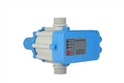
As a supplier of water pump inverters, we offer a wide range of products to meet different customer needs. Our Low-power Water Pump Inverter is suitable for small-scale water pump applications, such as domestic water supply and irrigation systems. It provides reliable voltage and frequency control with a compact design and easy installation.
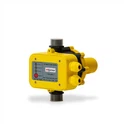
For larger water pump systems, our Constant Pressure Pump VSD Inverter is an ideal choice. It can maintain a constant water pressure in the system by automatically adjusting the motor speed based on the demand. This ensures a stable and efficient water supply for commercial and industrial applications.
We also offer 380V Water Pump Inverter for high-power water pump systems. These inverters are designed to handle heavy loads and provide precise voltage and frequency control in harsh industrial environments.
Contact Us for Purchase and Consultation
If you are interested in our water pump inverter products or have any questions about voltage and frequency control, please feel free to contact us. Our team of experts is ready to provide you with detailed information and technical support. We look forward to discussing your specific requirements and finding the best solution for your water pump system.
References
- Mohan, N., Undeland, T. M., & Robbins, W. P. (2012). Power Electronics: Converters, Applications, and Design. Wiley.
- Bose, B. K. (2006). Modern Power Electronics and AC Drives. Prentice Hall.