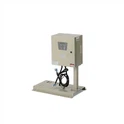
A Variable Frequency Drive (VFD) pump is a remarkable piece of technology that has revolutionized the way we control fluid flow in various applications. As a supplier of VFD pumps, I've witnessed firsthand the benefits these systems bring to industries and everyday operations. In this blog post, I'll delve into how a VFD pump adjusts the flow rate, exploring the underlying principles, components, and advantages of this intelligent pumping solution.
Understanding the Basics of a VFD Pump
Before we dive into the flow rate adjustment mechanism, let's briefly understand what a VFD pump is. A VFD pump consists of a pump and a variable frequency drive. The pump is responsible for moving fluid, while the VFD is an electronic device that controls the speed of the pump motor. By varying the frequency and voltage supplied to the motor, the VFD can adjust the motor's rotational speed, which in turn affects the pump's performance.
The Relationship Between Motor Speed and Flow Rate
The flow rate of a pump is directly related to the speed of its motor. According to the affinity laws, the flow rate (Q) of a centrifugal pump is proportional to the speed (N) of the motor. Mathematically, this relationship can be expressed as:
[ \frac{Q_1}{Q_2} = \frac{N_1}{N_2} ]
Where (Q_1) and (Q_2) are the flow rates at speeds (N_1) and (N_2) respectively. This means that if you increase the motor speed, the flow rate will increase proportionally, and vice versa.
How the VFD Adjusts the Motor Speed
The VFD adjusts the motor speed by changing the frequency of the electrical power supplied to the motor. In a standard electrical system, the power frequency is fixed (e.g., 50 Hz or 60 Hz). However, a VFD can vary this frequency within a certain range.
When the VFD receives a signal to change the flow rate, it adjusts the frequency of the output voltage. As the frequency decreases, the motor speed decreases, and the flow rate of the pump also decreases. Conversely, when the frequency increases, the motor speed and flow rate increase.
The VFD uses a process called Pulse Width Modulation (PWM) to control the frequency and voltage. PWM involves rapidly switching the power on and off at a high frequency. By varying the width of the pulses, the VFD can control the average voltage supplied to the motor, which in turn controls the motor speed.
Components of a VFD for Flow Rate Adjustment
A VFD consists of several key components that work together to adjust the flow rate of the pump:


- Rectifier: The rectifier converts the incoming AC power into DC power. It typically consists of diodes that allow the current to flow in only one direction.
- DC Bus: The DC bus stores the DC power from the rectifier. It acts as a buffer between the rectifier and the inverter.
- Inverter: The inverter converts the DC power from the DC bus back into AC power with a variable frequency and voltage. It uses insulated-gate bipolar transistors (IGBTs) to switch the power on and off at high speeds, implementing the PWM technique.
- Control Circuit: The control circuit is the brain of the VFD. It receives signals from sensors and user inputs, and based on these signals, it calculates the appropriate frequency and voltage to be supplied to the motor.
Advantages of Using a VFD Pump for Flow Rate Adjustment
There are several advantages to using a VFD pump for flow rate adjustment:
- Energy Efficiency: By adjusting the motor speed to match the required flow rate, a VFD pump can significantly reduce energy consumption. According to the affinity laws, the power consumption (P) of a centrifugal pump is proportional to the cube of the speed ((P \propto N^3)). This means that a small reduction in speed can result in a large reduction in power consumption.
- Precise Control: A VFD pump allows for precise control of the flow rate. It can respond quickly to changes in demand, maintaining a constant flow rate even under varying conditions.
- Extended Equipment Life: By operating the pump at lower speeds when full flow is not required, a VFD pump can reduce wear and tear on the pump and motor, extending their lifespan.
- Soft Start and Stop: A VFD pump provides a soft start and stop function, which reduces mechanical stress on the pump and piping system during startup and shutdown.
Applications of VFD Pumps for Flow Rate Adjustment
VFD pumps are used in a wide range of applications where flow rate adjustment is required:
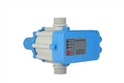
- Water Supply Systems: In water supply systems, VFD pumps can be used to maintain a constant pressure and flow rate, ensuring a reliable water supply to buildings and communities. For example, our 60HZ Frequency Conversion Water Pump is designed for use in water supply systems with a 60 Hz power supply.
- HVAC Systems: In heating, ventilation, and air conditioning (HVAC) systems, VFD pumps are used to control the flow of chilled water and hot water, optimizing energy efficiency and comfort.
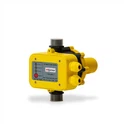
- Industrial Processes: In industrial processes such as chemical manufacturing, food processing, and wastewater treatment, VFD pumps are used to control the flow of various fluids, ensuring precise process control and product quality. Our Frequency Conversion Constant Pressure Water Pump is suitable for industrial applications where constant pressure is required.
- Irrigation Systems: In irrigation systems, VFD pumps can be used to adjust the flow rate based on the water requirements of different crops and soil conditions. Our Integrated Frequency Conversion Water Pump is a compact and efficient solution for irrigation applications.
Contact for Purchase and Negotiation
If you're interested in purchasing a VFD pump for your application, I encourage you to contact us for further discussion. Our team of experts can help you select the right pump and VFD combination based on your specific requirements. We offer a wide range of VFD pumps with different flow rates, pressures, and power ratings to meet your needs. Whether you're looking for a small pump for a residential application or a large pump for an industrial project, we have the solution for you.
References
- Cengel, Y. A., & Cimbala, J. M. (2014). Fluid Mechanics: Fundamentals and Applications. McGraw-Hill Education.
- Karassik, I. J., Messina, J. P., Cooper, P. T., & Heald, C. C. (2008). Pump Handbook. McGraw-Hill Education.
- Hydraulic Institute. (2012). ANSI/HI 9.6.3-2012, Rotodynamic Pumps - Guideline for NPSH Margin.