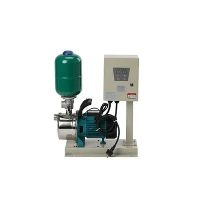
Can a water pump inverter be programmed? This is a question that many customers often ask us, as a leading supplier of Water Pump Inverter. In this blog post, we will explore the programming capabilities of water pump inverters, the benefits of programming, and how it can optimize the performance of your water pumping systems.
Understanding Water Pump Inverters
Before delving into the programming aspect, it's essential to understand what a water pump inverter is. A water pump inverter, also known as a variable frequency drive (VFD), is an electronic device that controls the speed of an electric motor driving a water pump. By adjusting the frequency and voltage supplied to the motor, the inverter can vary the motor's speed, which in turn controls the flow rate and pressure of the water pump.
Water pump inverters offer several advantages over traditional fixed-speed pumps. They can save energy by running the pump at the optimal speed required for the application, reduce wear and tear on the pump and motor, and provide better control over the water system. These benefits make them a popular choice for a wide range of applications, including residential water supply, irrigation, industrial water circulation, and wastewater treatment.
The Programmability of Water Pump Inverters
The short answer is yes, water pump inverters can be programmed. Most modern water pump inverters come with built-in programming capabilities that allow users to customize the operation of the pump according to their specific needs. The programming features can vary depending on the model and manufacturer of the inverter, but they generally include the following:
Speed Control
One of the primary functions of a water pump inverter is to control the speed of the pump motor. Through programming, users can set the desired speed range, acceleration and deceleration times, and even create speed profiles for different operating conditions. For example, in an irrigation system, the pump can be programmed to run at a higher speed during peak water demand and a lower speed during off-peak hours to save energy.
Pressure Control
Many water pump inverters support pressure control functionality. Users can program the inverter to maintain a constant pressure in the water system by adjusting the pump speed accordingly. This is particularly useful in applications where a stable water pressure is required, such as in a residential water supply or a commercial building's plumbing system. The inverter can be set to start and stop the pump automatically based on the pressure level, ensuring efficient and reliable operation.
Flow Control
In addition to speed and pressure control, some water pump inverters allow for flow control programming. Users can set the desired flow rate, and the inverter will adjust the pump speed to maintain that flow. This is beneficial in applications where a specific volume of water needs to be delivered, such as in a cooling system or a chemical processing plant.
Protection Settings
Programming also enables users to configure various protection settings for the water pump and motor. These settings can include overcurrent protection, overvoltage protection, undervoltage protection, and overtemperature protection. By setting appropriate protection parameters, the inverter can prevent damage to the pump and motor in case of abnormal operating conditions, extending their lifespan and reducing maintenance costs.
Benefits of Programming Water Pump Inverters
The ability to program water pump inverters offers numerous benefits for both residential and commercial users:
Energy Efficiency
By programming the inverter to run the pump at the optimal speed for the specific application, significant energy savings can be achieved. Instead of running the pump at full speed all the time, the inverter can adjust the speed based on the actual demand, reducing energy consumption and lowering electricity bills. For example, in a water supply system, the pump can be programmed to operate at a lower speed during periods of low water usage, such as at night.
Improved System Performance
Programming allows for precise control over the water pump, resulting in improved system performance. The ability to set specific speed, pressure, and flow rates ensures that the water system operates efficiently and reliably. This can lead to better water distribution, reduced water hammer, and improved overall system stability.
Customization
Every water pumping application is unique, and programming provides the flexibility to customize the inverter's operation to meet specific requirements. Whether it's a small residential well pump or a large industrial water circulation system, users can tailor the inverter settings to optimize the performance of the pump and the entire water system.
Remote Monitoring and Control
Some advanced water pump inverters support remote monitoring and control capabilities. Through programming, users can connect the inverter to a network and monitor its operation remotely using a computer or a mobile device. This allows for real-time adjustment of the inverter settings, early detection of potential problems, and proactive maintenance, improving the overall management of the water system.
Programming Methods
There are several ways to program a water pump inverter, depending on the model and its features:
Keypad Programming
Most water pump inverters come with a built-in keypad that allows users to access the programming menu and make changes to the inverter settings. The keypad typically has a display screen that shows the current settings and provides prompts for entering new values. This is a straightforward and convenient method for basic programming, and it doesn't require any additional equipment.
PC Software
Some inverters support programming using dedicated PC software. Users can connect the inverter to a computer via a serial or USB cable and use the software to access advanced programming features, create and save complex programs, and perform diagnostic tests. PC software programming is more suitable for users who need to make extensive changes to the inverter settings or who want to manage multiple inverters from a central location.
Remote Programming
As mentioned earlier, some water pump inverters offer remote programming capabilities. This allows users to program the inverter from a remote location using a network connection. Remote programming is particularly useful for large-scale water systems or for applications where the inverter is installed in a hard-to-reach location.


Our Product Offerings
As a supplier of water pump inverters, we offer a wide range of products to meet the diverse needs of our customers. Our New Single-phase Water Pump Inverter is designed for small to medium-sized residential and commercial applications. It features easy-to-use programming capabilities, energy-saving functions, and reliable performance.
For larger industrial applications, our 380V Water Pump Inverter provides high-power and high-performance operation. It offers advanced programming features, such as multi-pump control, pressure and flow optimization, and comprehensive protection functions.
Contact Us for Procurement and Consultation
If you are interested in our water pump inverters or have any questions about programming and using them, we encourage you to contact us. Our team of experts is ready to provide you with detailed product information, technical support, and customized solutions. Whether you are looking to upgrade your existing water pumping system or install a new one, we can help you find the right inverter for your needs.
References
- Blaschke, F. (1972). The principle of field orientation as applied to the new transvector closed-loop control system for rotating-field machines. Siemens Review, 39, 217-220.
- Bose, B. K. (2006). Modern Power Electronics and AC Drives. Prentice Hall.
- Mohan, N., Undeland, T. M., & Robbins, W. P. (2012). Power Electronics: Converters, Applications, and Design. John Wiley & Sons.