Can a Variable Frequency Drive Pump be used in a desalination plant?
As a supplier of Variable Frequency Drive (VFD) pumps, I am often asked whether these pumps can be effectively used in desalination plants. This question is crucial as desalination is a complex and energy - intensive process, and the choice of pumps can significantly impact the overall efficiency and cost - effectiveness of the plant. In this blog, I will delve into the technical aspects and practical considerations to answer this question comprehensively.
Understanding Variable Frequency Drive Pumps
Before discussing their application in desalination plants, it is essential to understand what VFD pumps are. A Variable Frequency Drive Pump is a pump equipped with a variable frequency drive, which is an electronic device that controls the speed of the pump motor by adjusting the frequency and voltage of the electrical power supplied to it. This allows the pump to operate at different speeds according to the system's requirements, rather than running at a fixed speed all the time.
The main advantage of VFD pumps is their energy - saving potential. In many traditional pumping systems, pumps are sized to meet the maximum demand, but in reality, the demand often varies. When a pump runs at a fixed speed, it may consume more energy than necessary during periods of low demand. VFD pumps can adjust their speed to match the actual demand, resulting in significant energy savings. For example, if the flow rate required in a system drops by 50%, a VFD pump can reduce its speed, and the power consumption will be reduced by approximately 87.5% according to the affinity laws.
Another benefit of VFD pumps is their ability to provide precise control. They can maintain a constant pressure or flow rate in the system, which is crucial for many industrial processes. This precise control also helps to reduce wear and tear on the pump and other system components, extending their service life.
Desalination Processes and the Role of Pumps
Desalination is the process of removing salt and other impurities from seawater or brackish water to produce freshwater. There are two main types of desalination processes: thermal desalination and membrane - based desalination.
Thermal desalination processes, such as multi - stage flash distillation (MSF) and multi - effect distillation (MED), involve heating the seawater to produce steam, which is then condensed to form freshwater. Pumps are used in these processes to circulate the seawater, brine, and steam within the system. They need to be able to handle high - temperature and high - pressure conditions.
Membrane - based desalination processes, such as reverse osmosis (RO), use a semi - permeable membrane to separate the salt and other impurities from the water. High - pressure pumps are required to force the seawater through the membrane. The pressure required for RO desalination can be as high as 50 - 80 bar, depending on the salt concentration of the feed water.
Suitability of VFD Pumps in Desalination Plants
Now, let's consider whether VFD pumps can be used in desalination plants.
Energy Efficiency
Energy consumption is one of the major costs in desalination plants. As mentioned earlier, VFD pumps can adjust their speed according to the actual demand, which can lead to significant energy savings. In a desalination plant, the demand for water may vary depending on factors such as the time of day, season, and the availability of freshwater from other sources. By using VFD pumps, the plant can optimize its energy consumption and reduce operating costs. For example, during periods of low water demand, the VFD pumps can slow down, reducing the energy used for pumping.
Precise Control
Precise control is essential in desalination processes. In membrane - based desalination, maintaining a constant pressure is crucial for the proper functioning of the membranes. If the pressure is too high, it can damage the membranes; if it is too low, the desalination efficiency will be reduced. VFD pumps can provide precise control of the pressure and flow rate, ensuring the stable operation of the desalination process. In thermal desalination, VFD pumps can also help to maintain the proper circulation of fluids within the system, improving the overall efficiency of the process.
System Flexibility
Desalination plants may need to be expanded or modified in the future to meet the growing demand for freshwater. VFD pumps offer greater flexibility compared to fixed - speed pumps. They can be easily adjusted to handle different flow rates and pressures, making them suitable for system upgrades. For example, if a desalination plant decides to increase its production capacity, the VFD pumps can be reprogrammed to operate at a higher speed to meet the new demand.
Corrosion Resistance
Seawater is highly corrosive, and pumps used in desalination plants need to be made of materials that can resist corrosion. Many VFD pumps are available with corrosion - resistant materials, such as stainless steel or special coatings, which make them suitable for use in seawater applications.
Challenges and Considerations
While VFD pumps offer many advantages for desalination plants, there are also some challenges and considerations that need to be addressed.
Initial Cost
The initial cost of VFD pumps is generally higher than that of traditional fixed - speed pumps. This is because the variable frequency drive adds to the cost of the pump. However, it is important to consider the long - term savings in energy and maintenance costs when evaluating the cost - effectiveness of VFD pumps. In many cases, the energy savings over the life of the pump can offset the higher initial cost.
Complexity
VFD pumps are more complex than traditional pumps. They require more advanced control systems and technical expertise for installation, operation, and maintenance. Plant operators need to be trained to use and maintain VFD pumps properly. Additionally, the variable frequency drive may be more susceptible to electrical interference and other technical issues, which need to be addressed to ensure the reliable operation of the pump.
Compatibility with Existing Systems
When retrofitting VFD pumps into an existing desalination plant, compatibility issues may arise. The new pumps need to be compatible with the existing piping, valves, and control systems. In some cases, modifications to the existing system may be required, which can add to the cost and complexity of the installation.
Conclusion
In conclusion, Variable Frequency Drive pumps can be effectively used in desalination plants. They offer significant advantages in terms of energy efficiency, precise control, system flexibility, and corrosion resistance. However, the higher initial cost, complexity, and compatibility issues need to be carefully considered.
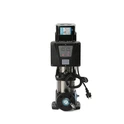
If you are considering using VFD pumps in your desalination plant, I encourage you to explore our range of Household Variable Frequency Water Pump, Variable Frequency Drive Water Pump, and Intelligent Variable Frequency Water Pump. Our pumps are designed to meet the specific requirements of desalination plants, offering high - quality performance and energy - saving benefits.
We are always ready to discuss your specific needs and provide you with the best solutions for your desalination project. Please feel free to contact us for more information and to start a procurement discussion.


References
- "Pumping System Assessment Tool (PSAT) User's Guide", U.S. Department of Energy.
- "Desalination Technology and Engineering", McGraw - Hill Professional.
- "Variable Frequency Drives: Principles and Applications", Pearson Education.