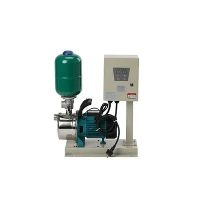
As a seasoned supplier of Clean Water Pump Controllers, I've received numerous inquiries about the possibility of controlling multiple pumps with a single controller. This question is not only relevant for those looking to optimize their water pumping systems but also for cost - efficiency and system management. In this blog, I'll delve into the technical aspects, advantages, limitations, and practical applications of using a clean water pump controller to manage multiple pumps.
Technical Feasibility
The ability of a clean water pump controller to control multiple pumps largely depends on its design and specifications. Modern Clean Water Pump Controller are engineered with advanced microprocessors and sophisticated control algorithms that can handle complex tasks. These controllers can be programmed to monitor and regulate the operation of multiple pumps based on various parameters such as water pressure, flow rate, and water level.
For instance, some high - end controllers use frequency conversion technology. By adjusting the frequency of the power supply to the pumps, they can control the speed of each pump independently. This allows for precise control of the overall water flow and pressure in a system with multiple pumps. If the demand for water increases, the controller can start additional pumps or increase the speed of the running pumps. Conversely, when the demand decreases, it can stop some pumps or reduce their speed.
Another important factor is the number of output channels on the controller. A controller with multiple output channels can send control signals to different pumps simultaneously. For example, a controller with three output channels can directly control three pumps. However, it's crucial to ensure that the electrical capacity of the controller is sufficient to handle the total power requirements of all the pumps it controls.
Advantages of Controlling Multiple Pumps
Cost - Efficiency
One of the most significant advantages is cost savings. Instead of purchasing a separate controller for each pump, using a single controller to manage multiple pumps can significantly reduce the initial investment. Moreover, the maintenance cost is also lower as there is only one device to service and replace parts for.
Energy Savings
By controlling multiple pumps together, the controller can optimize the energy consumption of the entire pumping system. For example, in a system with two pumps, the controller can run one pump at full capacity when the demand is low and start the second pump only when the demand exceeds the capacity of the first pump. This way, the system avoids running both pumps at full capacity all the time, which would consume more energy.
Improved System Performance
A single controller can ensure that all pumps work in harmony, providing a more stable and consistent water supply. It can prevent issues such as over - pressurization or under - pressurization in the water system. For example, in a large building's water supply system, a clean water pump controller can regulate the operation of multiple pumps to ensure that all floors receive an adequate and stable water pressure.
Limitations
Compatibility Issues
Not all pumps are compatible with every clean water pump controller. Different pumps may have different electrical characteristics, such as voltage, current, and power requirements. It's essential to ensure that the controller is compatible with the pumps in terms of both electrical and mechanical aspects. For example, a pump designed for a specific type of fluid or with a particular operating range may not work correctly if controlled by an incompatible controller.
Complexity of Installation and Programming
Installing and programming a controller to manage multiple pumps can be more complex than for a single - pump system. It requires a good understanding of the pumping system, the controller's functions, and electrical engineering principles. Incorrect installation or programming can lead to system malfunctions or even damage to the pumps and the controller.
Practical Applications
Residential Water Supply Systems
In a large residential building, multiple pumps may be required to supply water to different floors or sections. A clean water pump controller can be used to manage these pumps effectively. For example, in a high - rise apartment building, the controller can start the pumps on the lower floors first and then gradually start the pumps on the upper floors as the water demand increases. This ensures that all residents have access to a stable water supply.
Industrial Water Treatment Plants
Industrial water treatment plants often use multiple pumps for different processes, such as water intake, filtration, and chemical dosing. A clean water pump controller can control these pumps to ensure that the entire treatment process runs smoothly. For example, it can control the pumps that supply water to the filtration system based on the water quality and flow rate requirements.
Agricultural Irrigation Systems
In large - scale agricultural irrigation, multiple pumps may be used to supply water to different fields or irrigation zones. A clean water pump controller can manage these pumps according to the soil moisture levels, weather conditions, and crop water requirements. This helps to optimize the use of water resources and improve the efficiency of the irrigation system.


Considerations for Choosing a Controller
Power Rating
As mentioned earlier, the power rating of the controller must be sufficient to handle the total power requirements of all the pumps it controls. It's important to calculate the total power of all the pumps and choose a controller with a power rating that exceeds this value to ensure safe and reliable operation.
Functionality
The controller should have the necessary functions to meet the specific requirements of the pumping system. For example, if the system requires precise control of water pressure, the controller should have a pressure - sensing function and be able to adjust the pump speed accordingly. Some controllers also offer features such as fault detection and alarm functions, which can be very useful for monitoring the operation of multiple pumps.
Expandability
If there is a possibility of expanding the pumping system in the future by adding more pumps, it's advisable to choose a controller with expandable capabilities. This way, the controller can be easily upgraded to control additional pumps without having to replace it entirely.
Conclusion
In conclusion, a clean water pump controller can indeed control multiple pumps, offering many advantages such as cost - efficiency, energy savings, and improved system performance. However, it's essential to consider factors such as compatibility, electrical capacity, and installation complexity. When choosing a controller, make sure to select one that meets the specific requirements of your pumping system.
If you're interested in purchasing a Clean Water Pump Controller for your multiple - pump system, or have any questions about our products, such as the Intelligent Adjustable Pressure Pump Control Switch or the 1.1KW Water Pump Control Switch, please feel free to contact us for further discussion and negotiation.
References
- "Pump Handbook" by Igor J. Karassik et al.
- Technical documents from clean water pump controller manufacturers.