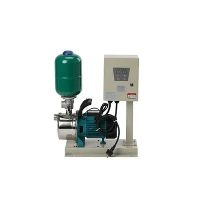
Hey there! As a supplier of Water Pump Pressure Controllers, I often get asked this question: “Which is better, a mechanical or electronic water pump pressure controller?” Well, let's dive right in and break it down.
Understanding the Basics
First off, what exactly do these controllers do? A water pump pressure controller is a device that manages the operation of a water pump based on the water pressure in the system. It ensures that the pump turns on when the pressure drops below a set level and turns off when it reaches the desired upper limit. This helps maintain a consistent water pressure in your home, office, or any other place where water is being used.
Mechanical Water Pump Pressure Controllers
Let's start with mechanical controllers. These are the old - school option. They've been around for ages and are pretty straightforward in their design.
How They Work
Mechanical pressure controllers typically use a diaphragm and a set of springs. When the water pressure changes, the diaphragm moves. This movement is then transferred to a switch through the springs. Once the pressure reaches a certain point, the switch either turns the pump on or off.
Advantages
- Simplicity: One of the biggest perks of mechanical controllers is their simplicity. There aren't a whole bunch of complex electronic components. This means they're generally easier to understand and repair. If you're a bit handy with tools, you can probably take a look at it and figure out what's wrong.
- Durability: Since they don't rely on delicate electronics, mechanical controllers can be quite durable. They can withstand harsh conditions, like a lot of vibrations or dirty water. For example, in agricultural settings where the water might not be the cleanest, a mechanical controller can keep on working.
- Cost - effective: Generally, mechanical controllers are less expensive than their electronic counterparts. If you're on a tight budget, this can be a major selling point.
Disadvantages
- Limited Precision: Mechanical controllers aren't as precise as electronic ones. The set pressure points can be a bit rough, and it's hard to make very fine adjustments. This can lead to some fluctuations in water pressure.
- Wear and Tear: Over time, the mechanical parts like the springs and the diaphragm can wear out. This means you might have to replace parts more often, which can add up in the long run.
- Lack of Features: They usually don't come with a lot of extra features. For instance, you won't find things like automatic shut - off in case of a problem or the ability to connect to a smart home system.
Electronic Water Pump Pressure Controllers
Now, let's talk about electronic water pump pressure controllers. These are the more modern option, and they've got a lot going for them.


How They Work
Electronic controllers use sensors to measure the water pressure. These sensors send signals to a microprocessor. The microprocessor then decides whether to turn the pump on or off based on the pre - set pressure values.
Advantages
- High Precision: Electronic controllers offer a much higher level of precision. You can set the pressure points very accurately, which means you can have a very consistent water pressure. This is great for applications where a steady pressure is crucial, like in a high - end residential building.
- Advanced Features: Electronic controllers come with a whole bunch of extra features. Some can automatically shut off the pump if there's a problem, like a leak or a blocked pipe. Others can be connected to a smart home system, so you can control the pump from your phone. Check out our High Quality Water Pump Controller for some great examples of these advanced features.
- Long - term Savings: While they might cost more upfront, electronic controllers can save you money in the long run. Their precision means the pump doesn't have to work as hard, which can reduce energy consumption.
Disadvantages
- Complexity: The complexity of electronic controllers can be a double - edged sword. On one hand, it gives you all those great features. On the other hand, it can be a real headache if something goes wrong. If you're not tech - savvy, it can be hard to figure out what's up.
- Vulnerability: Electronic components are more vulnerable to things like power surges, moisture, and temperature changes. In a place with unstable power or high humidity, an electronic controller might not last as long.
- Higher Cost: As mentioned earlier, electronic controllers are generally more expensive. This can be a deal - breaker for some people.
Making the Right Choice
So, which one is better? Well, it really depends on your specific needs.
- Residential Use: If you're using it in a regular home, an electronic controller might be a good choice. You can enjoy a consistent water pressure, and the advanced features can make your life easier. For example, our 110V Water Pump Electronic Pressure Switch is perfect for many household applications. But if you're on a tight budget and don't mind a bit of pressure fluctuation, a mechanical controller could work too.
- Commercial or Industrial Use: In commercial or industrial settings, the choice depends on the nature of the operation. If precision is crucial, like in a factory where a specific water pressure is needed for a manufacturing process, an electronic controller is the way to go. But if the environment is harsh and the cost is a major factor, a mechanical controller might be more suitable.
- Agricultural Use: In agriculture, mechanical controllers are often preferred. The water might be dirty, and the conditions can be tough. The durability of mechanical controllers makes them a good fit. However, if you're looking for more control over your irrigation system, an electronic controller could be worth the investment.
Our Product Range
As a supplier, we offer a wide range of both mechanical and electronic water pump pressure controllers. Our Household Water Pump Controller is a great option for home use. It's designed to be easy to install and use, and it offers reliable performance.
If you're still not sure which type of controller is right for you, don't worry! Our team of experts is here to help. We can answer all your questions and give you personalized advice based on your specific situation.
Conclusion
In the end, there's no one - size - fits - all answer to whether a mechanical or electronic water pump pressure controller is better. Each has its own set of advantages and disadvantages. You need to consider your budget, the level of precision you need, and the environment where the controller will be used.
If you're interested in purchasing a water pump pressure controller or just want to learn more, feel free to get in touch with us. We're here to make sure you get the right product for your needs.
References
- "Water Pump Systems: Design and Application" by Smith, John
- "Pressure Control in Fluid Systems" by Johnson, Sarah