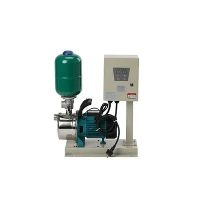
Hey there! As a supplier of Water Pump Pressure Tanks, I've had my fair share of folks asking about the differences between using these tanks with submersible pumps and jet pumps. So, I thought I'd sit down and break it all down for you.
Let's start with submersible pumps. These bad boys are designed to be submerged in water, usually down in a well. They're pretty popular because they're super efficient and can pump water from deep underground. When you pair a submersible pump with a water pump pressure tank, it's like a match made in heaven.
The main advantage of using a pressure tank with a submersible pump is that it helps to regulate the water pressure in your system. You see, submersible pumps can create a lot of pressure when they're running. Without a pressure tank, that pressure can fluctuate wildly, which isn't great for your pipes or your appliances. The pressure tank acts as a buffer, storing water under pressure so that when you turn on a faucet, you get a steady stream of water at a consistent pressure.
Another benefit is that it reduces the number of times the pump has to turn on and off. Every time a pump starts up, it uses a lot of energy. By having a pressure tank, the pump can run for longer periods between cycles, which saves you money on your energy bill in the long run. And let's not forget about the wear and tear on the pump itself. Frequent on-off cycling can shorten the lifespan of a pump, but with a pressure tank, the pump gets a break and lasts longer.
Now, let's talk about jet pumps. Jet pumps are typically installed above ground and are used to draw water from a well or other water source. They work by creating a vacuum that sucks water up through a pipe. Unlike submersible pumps, jet pumps rely on an external source of water to create the necessary pressure.
When you use a water pump pressure tank with a jet pump, it also helps to regulate the water pressure. But there are some key differences compared to using it with a submersible pump. Jet pumps are generally less powerful than submersible pumps, so they may not be able to generate as much pressure. That's where the pressure tank comes in handy. It can help boost the pressure and ensure that you have enough water pressure throughout your system.
One thing to keep in mind is that jet pumps are more susceptible to air leaks. If there's an air leak in the system, it can cause the pump to lose its prime and stop working. The pressure tank can help mitigate this issue by providing a reserve of water that can be used to prime the pump if needed. However, you still need to make sure that your jet pump system is properly installed and maintained to prevent air leaks.
Now, let's get into some of the technical aspects. Both submersible pumps and jet pumps use pressure switches to control when the pump turns on and off. These switches are usually set to a specific pressure range. When the pressure in the tank drops below the lower limit, the switch tells the pump to turn on. When the pressure reaches the upper limit, the switch tells the pump to turn off.
There are different types of pressure switches available, such as Mechanical Switches. These switches are simple and reliable, but they may require some adjustment over time. Another option is a Water Pump Float Switch, which is often used in applications where you need to control the water level in a tank or sump.


In addition to pressure switches, you may also need an Industrial Plastic Expansion Tank. These tanks are designed to absorb the expansion and contraction of water as it heats up and cools down. They help to prevent damage to your pipes and fixtures by reducing the stress on the system.
So, which one is better - using a water pump pressure tank with a submersible pump or a jet pump? Well, it really depends on your specific needs and circumstances. If you have a deep well and need a lot of water pressure, a submersible pump with a pressure tank is probably the way to go. On the other hand, if you have a shallow well or a smaller water system, a jet pump with a pressure tank may be a more cost-effective option.
At the end of the day, the most important thing is to make sure that your water pump system is properly designed and installed. That's where we come in. As a supplier of Water Pump Pressure Tanks, we have the expertise and experience to help you choose the right tank for your pump and your system. We offer a wide range of tanks in different sizes and capacities to meet your specific needs.
If you're in the market for a water pump pressure tank or have any questions about our products, don't hesitate to get in touch. We're here to help you find the best solution for your water pumping needs. Whether you're a homeowner, a contractor, or an industrial user, we can provide you with the high-quality products and excellent customer service that you deserve.
Contact us today to start the conversation and see how we can help you take your water pump system to the next level.
References
- Various industry publications on water pump systems and pressure tanks
- Manufacturer's specifications and guidelines for submersible pumps, jet pumps, and pressure tanks