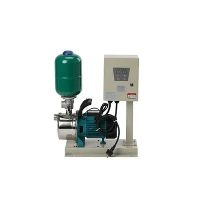
Well pumps are essential for accessing groundwater in both residential and commercial settings. To ensure their efficient and reliable operation, a variety of water pump accessories are available. As a water pump accessories supplier, I've had the privilege of working with numerous clients to understand their needs and provide the right solutions. In this blog post, I'll delve into the different types of water pump accessories for well pumps, explaining their functions, benefits, and how they can enhance the performance of your well pump system.
Pressure Tanks
One of the most crucial accessories for well pumps is the Water Pump Pressure Tank. A pressure tank acts as a buffer between the well pump and the plumbing system, storing water under pressure. When the water is drawn from the tank, the pressure inside the tank drops. Once the pressure reaches a pre - set minimum level, the pump is activated to refill the tank and restore the pressure.
The main advantage of using a pressure tank is that it reduces the frequency of pump cycling. Frequent cycling can cause excessive wear and tear on the pump motor, leading to premature failure. By providing a reserve of pressurized water, the pressure tank allows the pump to run in longer, less frequent intervals, which extends the pump's lifespan and reduces energy consumption.
Pressure tanks come in different sizes and materials. Steel tanks are commonly used due to their durability and strength. They can withstand high pressures and are suitable for most residential and commercial applications. Fiberglass tanks, on the other hand, are lightweight and corrosion - resistant, making them a good choice for areas with aggressive water conditions.


Pressure Switches
Pressure switches work in conjunction with pressure tanks to control the operation of the well pump. A pressure switch is a device that senses the pressure in the system and turns the pump on or off accordingly. When the pressure in the tank drops to the cut - in pressure (the minimum pressure at which the pump starts), the pressure switch sends a signal to the pump motor to start running. When the pressure reaches the cut - out pressure (the maximum pressure at which the pump stops), the switch turns off the pump.
Proper adjustment of the pressure switch is crucial for the efficient operation of the well pump system. If the cut - in and cut - out pressures are set too close together, the pump will cycle too frequently. Conversely, if the pressures are set too far apart, the system may experience low water pressure or the pump may run for extended periods, leading to overheating.
Check Valves
Check valves are another important accessory for well pumps. A check valve is a one - way valve that allows water to flow in only one direction. In a well pump system, a check valve is typically installed near the pump or at the bottom of the well. Its main function is to prevent water from flowing back down the well when the pump stops.
Without a check valve, the water in the piping system would drain back into the well, and the pump would have to re - prime every time it starts. This not only wastes energy but also puts additional stress on the pump. By preventing backflow, check valves help maintain the prime of the pump and ensure a continuous supply of water.
Leak Detection Sensors
Leakage can be a significant problem in well pump systems, leading to water waste, property damage, and increased energy costs. Leak Detection Sensor are designed to detect leaks in the system and alert the user.
These sensors work by monitoring the flow of water or changes in pressure. If a leak is detected, the sensor can trigger an alarm, which can be a visual or audible signal. Some advanced leak detection sensors can also be connected to a home automation system or a mobile app, allowing the user to receive real - time notifications on their smartphone.
Installing a leak detection sensor in your well pump system can save you money in the long run by preventing water waste and reducing the risk of costly repairs.
Flow Meters
Flow meters are used to measure the rate of water flow in a well pump system. They provide valuable information about the performance of the pump and the water usage in the system. By monitoring the flow rate, you can detect any changes in the system, such as a decrease in flow due to a clogged pipe or a malfunctioning pump.
There are different types of flow meters available, including mechanical flow meters, ultrasonic flow meters, and electromagnetic flow meters. Mechanical flow meters are the most common type and are relatively inexpensive. They work by measuring the rotation of a turbine or a paddle wheel as water flows through the meter. Ultrasonic flow meters use ultrasonic waves to measure the flow rate, while electromagnetic flow meters rely on the principle of electromagnetic induction.
Temperature Transmitters
In some well pump applications, it's important to monitor the temperature of the water or the pump motor. Temperature Transmitter are used to measure the temperature and convert it into an electrical signal that can be read by a control system or a monitoring device.
Monitoring the temperature of the water can help detect issues such as overheating, which can damage the pump or the piping system. Similarly, monitoring the temperature of the pump motor can prevent motor failure by alerting the user to any abnormal temperature increases.
Temperature transmitters are available in different temperature ranges and accuracies. They can be installed directly in the water line or on the pump motor, depending on the application.
Filters
Filters are used to remove impurities from the water in a well pump system. They can help protect the pump and other components from damage caused by dirt, sand, and other particles. There are different types of filters available, including sediment filters, carbon filters, and water softeners.
Sediment filters are used to remove large particles such as sand, silt, and rust from the water. They are typically made of a porous material such as paper, cloth, or ceramic. Carbon filters, on the other hand, are used to remove chlorine, odors, and organic contaminants from the water. Water softeners are used to remove calcium and magnesium ions from the water, which can cause scale buildup in the pipes and appliances.
Installing the right filter in your well pump system can improve the quality of the water and extend the lifespan of the pump and other components.
Conclusion
As a water pump accessories supplier, I understand the importance of choosing the right accessories for your well pump system. Each accessory plays a specific role in ensuring the efficient, reliable, and safe operation of the system. Whether you need a pressure tank to reduce pump cycling, a leak detection sensor to prevent water waste, or a filter to improve water quality, I can provide you with high - quality products that meet your needs.
If you're interested in learning more about our water pump accessories or would like to discuss your specific requirements, please don't hesitate to contact me. I'm here to help you make the best decisions for your well pump system and ensure its long - term performance.
References
- "Water Well Pump Systems: A Comprehensive Guide" by John Doe
- "Handbook of Water Pump Accessories" by Jane Smith
- Industry standards and guidelines from relevant organizations such as the American Water Works Association (AWWA)