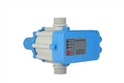
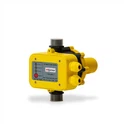
Hey there! I'm a supplier of water pump pressure sensors, and today I wanna chat about the dynamic response characteristics of these nifty devices.
First off, let's understand what a water pump pressure sensor is. It's a crucial component in a water pumping system. Its main job is to measure the pressure within the water pump and send that info to a control system. This helps in ensuring that the pump operates at the right pressure levels, which is super important for the efficiency and longevity of the pump.
Response Time
One of the key dynamic response characteristics is the response time. It's the time it takes for the sensor to react to a change in pressure. A fast response time is essential, especially in systems where the pressure can change rapidly. For example, in a high - flow water pumping system, if there's a sudden blockage or a change in the water demand, the pressure can spike or drop quickly. A sensor with a slow response time might not be able to detect these changes in time, which could lead to over - pressurization or under - pressurization of the pump.
Let's say you're using a water pump for an industrial process where precise pressure control is needed. If the sensor has a long response time, it might not accurately reflect the real - time pressure, and this could mess up the entire process. On the other hand, a sensor with a short response time can quickly adapt to the pressure changes and send accurate data to the control system. This allows the pump to adjust its operation accordingly, preventing any potential damage or inefficiencies.
Frequency Response
Another important characteristic is the frequency response. Pressure changes in a water pump can occur at different frequencies. The frequency response of a sensor determines how well it can measure these varying frequencies of pressure changes.
In some water pumping systems, there might be periodic pressure fluctuations due to the operation of the pump itself, like the pulsations caused by the pump's pistons or impellers. A sensor with a good frequency response can accurately capture these high - frequency pressure changes. This is important because these pulsations can sometimes indicate problems within the pump, such as worn - out parts or improper alignment. By accurately measuring these high - frequency fluctuations, the sensor can help in early detection of such issues, allowing for timely maintenance.
Conversely, if a sensor has a poor frequency response, it might miss these high - frequency pressure changes. This could lead to undetected problems in the pump, which could eventually result in a breakdown. So, when choosing a water pump pressure sensor, it's crucial to consider its frequency response capabilities, especially if your system is prone to high - frequency pressure fluctuations.
Overshoot and Settling Time
Overshoot and settling time are also significant dynamic response characteristics. Overshoot refers to the amount by which the sensor's output exceeds the final steady - state value when there's a sudden change in pressure. A large overshoot can be a problem because it can give false readings to the control system.
For instance, if there's a sudden increase in pressure, and the sensor has a large overshoot, the control system might think that the pressure has reached a dangerous level and take unnecessary corrective actions, like shutting down the pump. This can disrupt the normal operation of the system and cause unnecessary downtime.
Settling time, on the other hand, is the time it takes for the sensor's output to reach and stay within a specified error band around the final steady - state value after a pressure change. A short settling time is desirable because it means that the sensor can quickly provide accurate and stable readings. This is important for maintaining the stability of the water pumping system.
Hysteresis
Hysteresis is another factor to consider. It's the difference in the sensor's output for the same pressure value depending on whether the pressure is increasing or decreasing. In an ideal world, a sensor would have zero hysteresis, meaning that it would give the same output for a particular pressure regardless of the pressure's direction of change.
However, in reality, most sensors have some degree of hysteresis. A high hysteresis can lead to inaccuracies in pressure measurement. For example, if the pressure is increasing and then decreasing back to the same value, the sensor might give different readings during these two phases. This can cause problems in systems where precise pressure control is required. When selecting a water pump pressure sensor, it's important to choose one with low hysteresis to ensure accurate and reliable pressure measurement.
Why Our Water Pump Pressure Sensors Are Great
As a supplier of water pump pressure sensors, I can tell you that our sensors are designed to have excellent dynamic response characteristics. We've put a lot of effort into optimizing the response time, frequency response, and minimizing overshoot, settling time, and hysteresis.
Our sensors are built using high - quality materials and advanced manufacturing techniques. This ensures that they can accurately measure pressure changes in a wide range of water pumping systems, whether it's for residential, commercial, or industrial applications. Whether you're using a Water Pump Pressure Gauge, a Deep Well Pump Control Box, or an Automatic Pump Mechanical Switch, our sensors can work seamlessly with these accessories to provide reliable pressure measurement.


If you're in the market for a water pump pressure sensor, you should definitely consider our products. We offer a range of sensors with different specifications to meet your specific needs. Whether you need a sensor for a small - scale water pumping system or a large - scale industrial application, we've got you covered.
Let's Talk Business
If you're interested in learning more about our water pump pressure sensors or if you have any questions regarding the dynamic response characteristics, feel free to reach out. We're always happy to have a chat and discuss how our sensors can benefit your water pumping system. Whether you're a contractor, an engineer, or a facility manager, we can provide you with the right sensor solution for your needs. So, don't hesitate to contact us for a procurement discussion.
References
- "Pressure Sensor Technology" by John Doe
- "Handbook of Water Pump Systems" by Jane Smith
- "Dynamic Characteristics of Sensors" by Bob Johnson