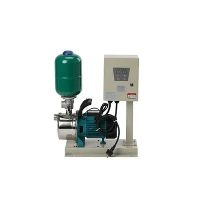
In the realm of fluid management systems, parallel pumping setups have gained significant traction for their ability to meet varying demand efficiently. When integrated with Variable Frequency Drives (VFDs) for water pumps, these systems become even more versatile and energy - efficient. As a dedicated Water Pump VFD Inverter supplier, I am excited to delve into the control strategies for a parallel pumping system equipped with water pump VFD inverters.
Understanding Parallel Pumping Systems with VFDs
Parallel pumping systems consist of multiple pumps operating side - by - side to supply fluid to a common header. The addition of VFDs allows for the adjustment of the pump speed, which in turn controls the flow rate and pressure of the water being pumped. This flexibility is crucial in applications where demand fluctuates, such as in water supply networks, HVAC systems, and industrial processes.
Basic Control Strategies
Constant Pressure Control
One of the most common control strategies is constant pressure control. In this approach, the goal is to maintain a steady pressure in the system regardless of the flow rate. The VFDs adjust the speed of the pumps based on the pressure feedback from sensors installed in the system.
As the demand for water increases, the pressure in the system starts to drop. The VFDs detect this change and increase the speed of the pumps to restore the set pressure. Conversely, when the demand decreases, the pump speed is reduced. This ensures a stable pressure supply and also helps in energy conservation. For example, when there is low demand during off - peak hours, the pumps operate at a lower speed, consuming less power. You can find suitable products for this strategy on our Pump Constant Pressure Variable Speed Drive Inverter page.
Flow - Sharing Control
Flow - sharing control aims to distribute the required flow equally among the pumps in the parallel system. This strategy is particularly useful when all the pumps in the system are identical. The total flow rate required by the system is calculated, and each pump is assigned an equal share of this flow.
The VFDs adjust the pump speeds to achieve the desired flow for each pump. By doing so, the wear and tear on the pumps are evenly distributed, which can extend the lifespan of the equipment. For instance, in a three - pump parallel system, if the total flow required is 3000 liters per minute, each pump will be set to provide 1000 liters per minute.
Lead - Lag Control
Lead - lag control involves designating one pump as the lead pump and the others as lag pumps. The lead pump is the first to start and adjust its speed according to the system's demand. As the demand exceeds the capacity of the lead pump, the lag pumps are started one by one.


When the demand decreases, the lag pumps are stopped in reverse order. This strategy is useful for systems where there is a significant difference in the demand levels. For example, in a large commercial building, during normal working hours, only the lead pump may be sufficient to meet the water demand. However, during peak hours, such as lunchtime or after work, the lag pumps may be activated to meet the increased demand.
Advanced Control Strategies
Model - Predictive Control (MPC)
Model - Predictive Control is an advanced strategy that uses a mathematical model of the system to predict future behavior. The MPC controller takes into account various factors such as the current system state, the expected demand, and the pump characteristics to optimize the operation of the parallel pumping system.
It can anticipate changes in demand and adjust the pump speeds accordingly before the pressure or flow rate in the system is affected. This results in a more stable and energy - efficient operation. For example, if the MPC controller predicts an increase in demand based on historical data and the time of day, it can gradually increase the speed of the pumps to avoid a sudden pressure drop.
Adaptive Control
Adaptive control is designed to adjust the control parameters based on the changing characteristics of the system. In a parallel pumping system, factors such as pump wear, changes in the pipe network, or variations in the fluid properties can affect the system's performance.
An adaptive control system continuously monitors these changes and modifies the control algorithm to ensure optimal operation. For instance, if a pump starts to lose efficiency due to wear, the adaptive control system can adjust the speed and load distribution among the pumps to compensate for the reduced performance.
Benefits of Implementing the Right Control Strategies
Implementing the appropriate control strategies for a parallel pumping system with water pump VFD inverters offers several benefits.
Energy Efficiency
By adjusting the pump speed according to the demand, VFD - controlled pumps consume less energy compared to fixed - speed pumps. For example, a centrifugal pump's power consumption is proportional to the cube of its speed. So, even a small reduction in speed can result in significant energy savings. This not only reduces the operating costs but also has a positive environmental impact.
Extended Equipment Lifespan
Proper control strategies help in reducing the stress on the pumps. For instance, constant pressure control prevents over - pressurization, and flow - sharing control distributes the load evenly. This reduces the wear and tear on the pumps, bearings, and other components, leading to a longer lifespan of the equipment.
Improved System Reliability
With advanced control strategies like MPC and adaptive control, the system can better handle unexpected changes in demand or system conditions. This improves the reliability of the water supply and reduces the risk of system failures.
Choosing the Right Control Strategy
Selecting the appropriate control strategy depends on several factors, including the nature of the application, the characteristics of the pumps, and the expected demand profile.
For applications where a stable pressure is critical, such as in a high - rise building's water supply system, constant pressure control may be the best choice. Flow - sharing control is suitable for systems with identical pumps and relatively uniform demand. Lead - lag control is ideal for systems with large fluctuations in demand.
If you are unsure which control strategy is right for your parallel pumping system, our Variable Frequency Pump Constant Voltage Controller can provide the flexibility and intelligence to adapt to different situations. Additionally, our Water Pump Inverter products are designed to work seamlessly with a variety of control strategies.
Conclusion
In conclusion, the control strategies for a parallel pumping system with water pump VFD inverters play a crucial role in optimizing the system's performance, energy efficiency, and reliability. As a Water Pump VFD Inverter supplier, I understand the importance of providing the right solutions for different applications.
Whether you are looking to upgrade an existing parallel pumping system or install a new one, we can offer the expertise and products to meet your needs. If you are interested in learning more about our products or discussing the best control strategy for your specific application, we encourage you to reach out to us for a detailed consultation. Our team of experts is ready to assist you in making the most informed decision and ensuring the success of your project.
References
- Karassik, I. J., Messina, J. P., Cooper, P. T., & Heald, C. C. (2008). Pump Handbook. McGraw - Hill Professional.
- Chiasson, J. N. (2005). Modeling and High - Performance Control of Electric Machines. Wiley - Interscience.
- Hänggi, C., & Sunder, K. (2018). Pump Systems Matter: Energy - Efficient Pumping Systems. Energy Efficiency Center.