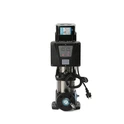
Hey there! As a supplier of Variable Frequency Drive (VFD) Pumps, I've seen firsthand how these pumps can revolutionize closed - loop control systems. In this blog, I'm gonna walk you through the numerous advantages of using a VFD pump in such systems.
Energy Efficiency
One of the most significant perks of using a VFD pump in a closed - loop control system is energy efficiency. Traditional pumps usually run at a fixed speed, which means they consume the same amount of energy regardless of the actual demand. This often leads to over - pumping and wasted energy.
In a closed - loop control system, a VFD pump can adjust its speed according to the real - time demand. For example, when the system requires less flow or pressure, the pump can slow down. This speed adjustment directly translates into reduced energy consumption. According to industry studies, VFD pumps can save up to 30 - 60% of energy compared to fixed - speed pumps. That's a huge cost - saver in the long run, especially for large - scale industrial applications.
Let's say you have a water circulation system in a factory. During off - peak hours, the demand for water flow is much lower. A fixed - speed pump would keep running at full blast, wasting a lot of electricity. But a VFD pump can sense the reduced demand and slow down, using only the energy it needs. This not only cuts down on your electricity bill but also helps in reducing your carbon footprint.

Precise Control
Closed - loop control systems are all about maintaining a specific setpoint, whether it's pressure, flow rate, or temperature. A VFD pump excels in providing precise control over these parameters.
The variable frequency drive allows for fine - tuning of the pump's speed. It can respond quickly to changes in the system and make adjustments to keep the setpoint stable. For instance, in a heating system, if the temperature drops below the setpoint, the VFD pump can increase its speed to circulate more hot water, bringing the temperature back up.
This precise control leads to better system performance and product quality. In a manufacturing process where a consistent flow of coolant is required, a VFD pump can ensure that the right amount of coolant is delivered at all times. This helps in preventing over - heating of equipment and improving the overall efficiency of the production line.

Extended Equipment Lifespan
Another great advantage of using a VFD pump in a closed - loop control system is the extended lifespan of the equipment. Fixed - speed pumps are often subject to constant wear and tear because they operate at full speed all the time. This can lead to premature failure of components such as bearings, seals, and impellers.
On the other hand, a VFD pump operates at different speeds depending on the demand. This reduces the stress on the pump components. When the pump runs at a lower speed, there is less friction and vibration, which means less damage to the internal parts.
For example, in a wastewater treatment plant, a VFD pump can adjust its speed based on the volume of wastewater flowing into the system. During periods of low flow, the pump runs at a slower speed, reducing the wear on the impeller and other parts. This results in fewer breakdowns and lower maintenance costs over the life of the pump.
Soft Start and Stop
VFD pumps offer the benefit of soft start and stop. Unlike fixed - speed pumps that start and stop abruptly, a VFD pump gradually ramps up or down its speed. This soft start and stop feature reduces the mechanical stress on the pump and the connected piping system.
When a fixed - speed pump starts suddenly, it can create a water hammer effect in the pipes. This sudden pressure surge can damage the pipes, valves, and other components in the system. A VFD pump eliminates this problem by starting slowly, allowing the fluid in the pipes to gradually reach the desired flow rate.
Similarly, when the pump stops, it does so smoothly, preventing the reverse water hammer effect. This protection of the piping system not only extends the lifespan of the infrastructure but also reduces the risk of leaks and costly repairs.

Adaptability
In a closed - loop control system, the requirements can change over time. A VFD pump is highly adaptable to these changes. It can easily be reprogrammed to meet new setpoints or operating conditions.
For example, if you expand your business and need to increase the flow rate in your water supply system, you don't have to replace the entire pump. You can simply adjust the settings of the VFD to increase the pump's speed and meet the new demand.
This adaptability also makes VFD pumps suitable for a wide range of applications. Whether it's a small Household Variable Frequency Water Pump for a home water supply or a large - scale 60HZ Frequency Conversion Water Pump for an industrial process, the VFD technology can be customized to fit the specific needs of the system.
Cost - Savings
All the advantages mentioned above ultimately lead to significant cost - savings. The energy savings alone can result in a quick return on investment. Additionally, the extended equipment lifespan and reduced maintenance costs further contribute to the overall cost - effectiveness of using a VFD pump in a closed - loop control system.
For businesses, these cost - savings can have a big impact on the bottom line. By reducing energy consumption and maintenance expenses, companies can allocate their resources more efficiently and improve their competitiveness in the market.

Reduced Noise and Vibration
VFD pumps generally produce less noise and vibration compared to fixed - speed pumps. When a pump runs at a constant high speed, it can generate a lot of noise and vibration, which can be a nuisance in both industrial and residential settings.
The variable speed operation of a VFD pump allows it to run more quietly. At lower speeds, the pump's components move more smoothly, resulting in less noise and vibration. This is particularly beneficial in applications where noise reduction is important, such as in hospitals or residential buildings.
Remote Monitoring and Control
Many modern VFD pumps come with the ability for remote monitoring and control. This means that you can monitor the pump's performance, adjust its settings, and receive alerts about any potential issues from anywhere in the world.
In a large industrial complex, it can be difficult and time - consuming to physically check each pump. With remote monitoring, operators can keep an eye on all the pumps in the system from a central control room. This improves the efficiency of maintenance and troubleshooting, as problems can be detected and addressed quickly.
If you're interested in incorporating a VFD pump into your closed - loop control system, I'd love to have a chat with you. We offer a wide range of VFD pumps, including the Integrated Frequency Conversion Water Pump, which are designed to meet the diverse needs of our customers. Whether you're looking for a pump for a small - scale project or a large industrial application, we've got you covered. Reach out to us to start the procurement process and discuss how our VFD pumps can optimize your system.
References
- "Energy - Efficient Pumping Systems", Hydraulic Institute
- "Variable Frequency Drives: Application and Selection", ABB Group