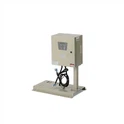
A water pump VFD (Variable Frequency Drive) inverter is a crucial device in modern water pumping systems, offering precise control over the pump's flow rate and other operational parameters. As a supplier of Water Pump VFD Inverters, I am well - versed in how these inverters function to adjust the flow rate of a water pump, and I'm excited to share this knowledge with you.
Basic Principles of a Water Pump VFD Inverter
To understand how a VFD inverter adjusts the flow rate of a water pump, we first need to grasp its fundamental working principle. A VFD inverter converts the incoming fixed - frequency, fixed - voltage AC power into a variable - frequency, variable - voltage AC power. In a typical water pump system, the pump motor is designed to operate at a certain speed, which is directly related to the frequency of the power supply. According to the synchronous speed formula of an induction motor (n_s=\frac{120f}{p}), where (n_s) is the synchronous speed, (f) is the power frequency, and (p) is the number of pole pairs of the motor. By changing the frequency (f) provided by the VFD inverter, we can effectively change the speed of the pump motor.
Relationship between Pump Speed and Flow Rate
The flow rate of a water pump is closely related to its speed. According to the affinity laws for pumps, the flow rate (Q) is proportional to the pump speed (n), i.e., (\frac{Q_1}{Q_2}=\frac{n_1}{n_2}). This means that if we increase the speed of the pump motor, the flow rate of the water pump will increase proportionally, and vice versa.
For example, if a water pump is originally operating at a speed (n_1) with a flow rate (Q_1), and we use a VFD inverter to increase the speed to (n_2 = 1.2n_1), then the new flow rate (Q_2) will be (Q_2 = 1.2Q_1). This linear relationship provides a simple and effective way to adjust the flow rate of the water pump.
How the VFD Inverter Adjusts the Frequency
The VFD inverter has several control methods to adjust the frequency, which in turn adjusts the pump speed and flow rate.


Manual Control
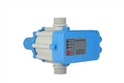
In manual control mode, the operator can directly set the output frequency of the VFD inverter through the control panel. This is suitable for applications where the flow rate requirements are relatively stable. For example, in a small - scale water supply system for a single building, if the water demand is known and does not change significantly, the operator can set the appropriate frequency on the VFD inverter to achieve the desired flow rate. Our 380V Water Pump Inverter is equipped with an intuitive control panel that allows for easy manual frequency adjustment.
Automatic Control
Automatic control is more commonly used in large - scale and complex water pumping systems. There are two main types of automatic control:
Pressure - Based Control
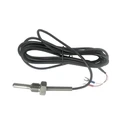
In a water supply system, maintaining a constant pressure is often crucial. The VFD inverter can be connected to a pressure sensor installed in the pipeline. When the water consumption increases and the pressure in the pipeline drops, the pressure sensor sends a signal to the VFD inverter. The inverter then increases the output frequency, which speeds up the pump motor and increases the flow rate to restore the pressure. Conversely, when the water consumption decreases and the pressure rises, the inverter reduces the frequency, slowing down the pump and decreasing the flow rate. This type of control is widely used in municipal water supply systems and industrial water circulation systems.
Flow - Based Control
In some applications, a specific flow rate needs to be maintained. A flow sensor can be installed in the pipeline to measure the actual flow rate. The VFD inverter compares the measured flow rate with the set target flow rate. If there is a deviation, the inverter adjusts the output frequency to bring the flow rate back to the desired value. This is useful in processes where a precise amount of water is required, such as in some chemical manufacturing processes.
Advantages of Using a VFD Inverter to Adjust Flow Rate
Energy Savings
One of the most significant advantages of using a VFD inverter to adjust the flow rate is energy savings. Traditional water pumps often operate at a fixed speed, and when the water demand is low, a large amount of energy is wasted. By using a VFD inverter to reduce the pump speed when the flow rate requirements are low, the power consumption of the pump motor can be significantly reduced. According to the affinity laws, the power consumption (P) of a pump is proportional to the cube of the speed, i.e., (\frac{P_1}{P_2}=(\frac{n_1}{n_2})^3). For example, if we reduce the pump speed to 80% of its original speed, the power consumption will be reduced to ((0.8)^3 = 0.512) or 51.2% of the original power consumption.
Extended Pump Life
By adjusting the flow rate through the VFD inverter, the pump can operate within its optimal performance range. This reduces the mechanical stress on the pump components, such as the impeller, bearings, and seals. As a result, the wear and tear of the pump are reduced, and its service life is extended.
Improved System Stability
The ability to precisely control the flow rate and pressure in the water pumping system helps to improve the overall stability of the system. In a water supply network, for example, maintaining a constant pressure and flow rate can prevent water hammering, which can cause damage to the pipes and other equipment.
Applications of Water Pump VFD Inverters
Residential Use
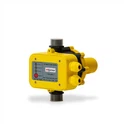
In residential buildings, our Variable Frequency Pump Converter for Home Use can be used in domestic water supply systems. It can ensure a stable water pressure in the house, whether it is for showering, washing dishes, or other daily water - using activities. When multiple water - using appliances are used simultaneously, the VFD inverter can adjust the pump speed to meet the increased water demand.
Industrial Use
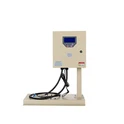
In industrial settings, water pumps are used in a wide range of applications, such as cooling water circulation, boiler feed water, and wastewater treatment. Our New Three - phase Water Pump Inverter is suitable for these industrial applications. It can provide precise control over the flow rate and pressure, ensuring the normal operation of industrial processes.
Contact for Purchase and Consultation
If you are interested in our Water Pump VFD Inverters and want to learn more about how they can be applied to your specific water pumping system, or if you have any questions regarding flow rate adjustment or other technical aspects, please feel free to contact us. We have a team of experienced technical experts who can provide you with detailed product information and customized solutions. Our products are known for their high quality, reliability, and energy - saving performance. Don't miss the opportunity to optimize your water pumping system with our advanced VFD inverters.
References
- Cengel, Y. A., & Cimbala, J. M. (2014). Fluid Mechanics: Fundamentals and Applications. McGraw - Hill Education.
- Karassik, I. J., Messina, J. P., Cooper, P. T., & Heald, C. C. (2008). Pump Handbook. McGraw - Hill Professional.
- Daugherty, R. L., Franzini, J. B., & Finnemore, E. J. (1985). Fluid Mechanics with Engineering Applications. McGraw - Hill.