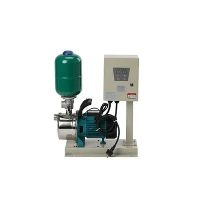
A well pump is a crucial component in a private water well system, responsible for drawing water from underground sources and delivering it to your home or other facilities. However, simply having a well pump might not ensure a steady and efficient water supply. This is where a water pump pressure tank comes into play. In this blog post, I'll explore whether a water pump pressure tank can be used with a well pump, and as a water pump pressure tank supplier, I'll also introduce some related products and explain the benefits of incorporating them into your well - water system.
The Compatibility of Water Pump Pressure Tanks with Well Pumps
The short answer is yes, a water pump pressure tank can and should be used with a well pump in most cases. A well pump operates by pulling water from the well and pushing it into the water distribution system. Without a pressure tank, the pump would turn on every time a faucet is opened and turn off as soon as the faucet is closed. This frequent cycling can cause several problems.
Firstly, it puts excessive wear and tear on the pump motor. The constant starting and stopping of the motor can lead to premature failure, increasing the maintenance and replacement costs. Secondly, the water pressure in the system would be inconsistent. You might experience sudden drops or surges in water pressure when multiple fixtures are in use, which can be quite inconvenient and may even damage some water - using appliances.


A water pump pressure tank acts as a buffer between the well pump and the water distribution system. It stores a certain volume of water under pressure. When you open a faucet, the water in the tank is released first, and the pump doesn't need to start immediately. Only when the water level and pressure in the tank drop below a certain point does the pump turn on to refill the tank. This reduces the number of times the pump cycles on and off, extends the pump's lifespan, and provides a more stable water pressure throughout the system.
How a Water Pump Pressure Tank Works with a Well Pump
To understand how they work together, we need to look at the basic components and operation of a pressure tank. A typical water pump pressure tank consists of a tank body, a diaphragm or bladder that separates the water and air chambers, and a pressure switch.
When the well pump starts, it pushes water into the pressure tank. As the water enters the tank, it compresses the air in the air chamber (either directly or via the diaphragm/bladder). The pressure switch monitors the water pressure in the tank. Usually, there are two pressure settings: the cut - in pressure and the cut - out pressure. When the pressure in the tank drops to the cut - in pressure (for example, 20 or 30 psi), the pressure switch signals the well pump to start. The pump then pumps water into the tank until the pressure reaches the cut - out pressure (such as 40 or 60 psi), at which point the pressure switch turns off the pump.
This cycle repeats as water is used in the system. The stored water in the tank provides an immediate supply when needed, and the pump only runs when necessary, ensuring an efficient and reliable water supply.
Related Products for a Well - Pump and Pressure - Tank System
As a water pump pressure tank supplier, we offer a range of products that can enhance the performance of your well - pump and pressure - tank system. One such product is the Stainless Steel Five - Way. This five - way fitting is made of high - quality stainless steel, which is corrosion - resistant and durable. It provides multiple connection points for the pressure tank, well pump, pressure gauge, pressure switch, and other components in the water system. The stainless - steel construction ensures a long service life and a tight seal, preventing water leaks and maintaining the system's efficiency.
We also offer two types of pressure transmitters: the VLF - 309 Pressure Transmitter and the VLF - 516 Pressure Transmitter. These pressure transmitters are designed to accurately measure the water pressure in the system. They can send the pressure data to a control panel or other monitoring devices, allowing you to keep track of the system's performance and troubleshoot any issues promptly. The VLF - 309 and VLF - 516 transmitters are both highly reliable and have a long sensor life, making them ideal for use in a well - pump and pressure - tank system.
Benefits of Using a Water Pump Pressure Tank with a Well Pump
- Energy Efficiency: As mentioned earlier, the pressure tank reduces the number of pump cycles. Since the pump doesn't have to start and stop constantly, it consumes less energy over time. This can lead to significant savings on your electricity bill, especially in homes or facilities with high water usage.
- Improved Water Pressure: With a pressure tank, you can enjoy a more consistent water pressure throughout your water distribution system. Whether you're taking a shower, doing the dishes, or watering the garden, you won't experience sudden drops or surges in water pressure, providing a more comfortable and efficient water - using experience.
- Extended Pump Lifespan: By reducing the wear and tear on the pump motor, the pressure tank helps to extend the lifespan of the well pump. This means you'll have to replace the pump less frequently, saving you money on both the pump itself and the installation costs.
Considerations When Using a Water Pump Pressure Tank with a Well Pump
Before installing a water pump pressure tank with your well pump, there are a few things to consider. Firstly, you need to choose the right size of the pressure tank. The size depends on factors such as the number of water fixtures in your home, the pump's flow rate, and your typical water usage patterns. A tank that is too small may not provide enough stored water, while a tank that is too large may be more expensive and take up unnecessary space.
Secondly, it's important to maintain the proper air pressure in the tank. Over time, the air in the tank may dissolve into the water, reducing the air cushion and affecting the tank's performance. You may need to check and adjust the air pressure periodically, usually once or twice a year, depending on the type of tank you have.
Conclusion
In conclusion, using a water pump pressure tank with a well pump is a highly beneficial practice. It improves the efficiency, reliability, and lifespan of your well - water system, while also providing a more consistent water pressure for your daily use. As a water pump pressure tank supplier, we are dedicated to providing high - quality products like the Stainless Steel Five - Way, VLF - 309 Pressure Transmitter, and VLF - 516 Pressure Transmitter to enhance your system's performance.
If you're looking to upgrade or install a new well - pump and pressure - tank system, we'd love to help. Contact us for more information on our products and how they can be integrated into your specific water - supply needs. Our team of experts is ready to provide you with professional advice and support to ensure you get the most out of your well - water system.
References
- "Water Well Systems: A Guide to Design, Installation, and Maintenance." Author Not Available. Publisher Not Available.
- "Residential Water Pressure Tanks: Sizing and Selection." Journal of Water Supply: Research and Technology - Aqua. Volume Not Specified, Year Not Specified.